

Holiday Post Automation: 5 Steps for Stores, From Catalog to Comments

Yes, you can largely automate holiday social media with a short scheduled plan plus a monitoring fallback. Most of your posts can go out on autopilot while you stay ready to catch what automation cannot predict. Your immediate next action: pick two or three primary platforms and schedule the core posts for your holiday window today as explained in how to plan a content calendar for marketing success.
TL;DR:
- Choose two or three priority platforms, schedule core posts one to three weeks ahead, and leave open slots for timely manual updates.
- During the holiday window, raise cadence to two or three posts daily, then assign someone to check comments and messages every day.
- Link promotional posts directly to live product or collection pages, enable shopping tags, and verify stock, prices, discount codes, and shipping deadlines before publishing.
- Use licensed media, get explicit permission before reposting customer content, disclose endorsements, and recheck offers near publication so scheduled posts do not mislead.
- Set benchmarks before launch, separate engagement and click rates by post goal, and compare attributed sales with your previous holiday campaign.
Table of Contents
- A ready-to-use holiday automation checklist
- Picking tools: schedulers, autoposters, and what to configure first
- Scheduling best practices that prevent holiday mistakes
- Content templates and a two-week schedule you can copy
- Staying responsive while most posting runs on autopilot
- How catalog-driven automation fits this workflow for store owners
- Optimizing automated holiday posts for sales, not just reach
- Working with platform algorithms during peak holiday weeks
- Measuring whether your automated holiday campaign worked
- Staying compliant with copyright and disclosure rules
- Where automation should stop and a human should step in
- Getting your store ready before the next holiday rush
- FAQ
- Sources
A ready-to-use holiday automation checklist
Before you open any scheduling tool, settle the basics so every post you queue actually supports the holiday instead of just filling a calendar slot.
- Lock your dates and goals. Decide which holiday dates matter, plus whether the push is about sales, brand awareness, or communicating store hours.
- Pick two to three priority platforms. Spreading thin content across six networks performs worse than concentrated content on the two or three where your customers actually are.
- Batch-create assets and captions. Build from templates and pull product details straight from your catalog so each post is specific, not generic.
- Schedule core posts one to three weeks ahead. Stagger posting times across time zones so your audience sees content when they are actually online.
- Assign monitoring duties. Name who checks comments and messages, and set DM or email auto-replies if your team goes fully offline for part of the holiday.
Work through these five steps in one sitting and the bulk of your holiday calendar is done. What is left is deciding how to handle the moments automation cannot plan for, which the later sections cover.
Picking tools: schedulers, autoposters, and what to configure first
Not every holiday post needs the same tool. Matching the tool type to the job keeps your setup lean instead of bloated with overlapping subscriptions.
- Multi-platform schedulers queue posts across several networks from one dashboard, which suits general holiday messaging and store-hours updates.
- Catalog-integrated autoposters pull directly from your product feed, which matters for ecommerce stores turning SKUs into timely promo posts.
- Native platform schedulers (built into Instagram, Facebook, or Pinterest) work fine for single-platform posting but add friction once you manage more than one account.
- Analytics and monitoring tools flag engagement spikes or unanswered messages, which matters most during the days you are posting on autopilot.
Once you pick your stack, the configuration is short: connect your accounts, confirm posting permissions on each platform, set your timezone and preferred posting windows, and upload your asset and caption templates so nothing needs last-minute formatting. Platform specifics matter too. Reels and Shorts generally outperform static feed images during peak shopping weeks, shorter videos in the 15 to 30 second range tend to hold attention better than longer cuts, and any post featuring a product should have shopping tags or links set up before it goes live, not after.
Scheduling best practices that prevent holiday mistakes
Holiday posting cadence should flex with the calendar. A steady one post a day works for normal weeks, but the window right before and during a major holiday usually benefits from two or three posts a day across your priority platforms, tapering back down once the event passes.
- Adapt one core asset across platforms instead of creating from scratch each time: crop the video for each aspect ratio, trim length to fit the platform norm, and adjust copy voice and the call to action.
- Pull your own historical holiday data before finalizing timing. Last year’s top-performing post times are a better guide than generic advice.
- Leave a visible gap in your schedule for last-minute manual posts. A fully packed queue leaves no room to react to something trending.
Pro Tip: Draft one “evergreen” holiday post that works regardless of exact timing, so you always have a safe fallback if a scheduled post needs to be swapped out fast.
Content templates and a two-week schedule you can copy
A handful of post types cover most of what a holiday campaign needs: store hours and shipping cutoffs, time-limited promos, gift idea roundups, individual product spotlights, user-generated content, and short reels showing products in use.
- “Last chance” hook: “Order by [date] to get it before the holiday.”
- Gift guide hook: “Still shopping for [recipient type]? Start here.”
- Spotlight hook: “Why customers keep coming back to [product].”
- Store hours hook: “Here’s when we’re open (and closed) this week.”
A simple two-week run might look like this: days one and two cover store hours and shipping deadlines, days three through five rotate gift guides and product spotlights, days six and seven feature a UGC repost and a reel, and the pattern repeats in week two with a promo push building toward the holiday itself, closing with a thank-you or last-call post the day before. Batch these ahead of time and the whole two weeks can be scheduled in one sitting.
Staying responsive while most posting runs on autopilot
Scheduled posts cover visibility, but someone still needs to own the moments automation cannot handle: a shipping question, a complaint, or a time-sensitive opportunity.
- Set an email auto-reply when your team is fully offline, including your return date and an alternate contact, following the structure Mailchimp recommends for auto-reply emails.
- Match the message to the length of your absence. Mailchimp’s out-of-office guidance outlines different templates for a short closure versus an extended holiday break.
- Assign at least one person to check comments and DMs daily, even on a reduced holiday schedule.
- Reserve scheduled posts for routine updates, and interrupt them only for something urgent: a stock issue, a shipping delay, or a trending moment worth joining in real time.
How catalog-driven automation fits this workflow for store owners
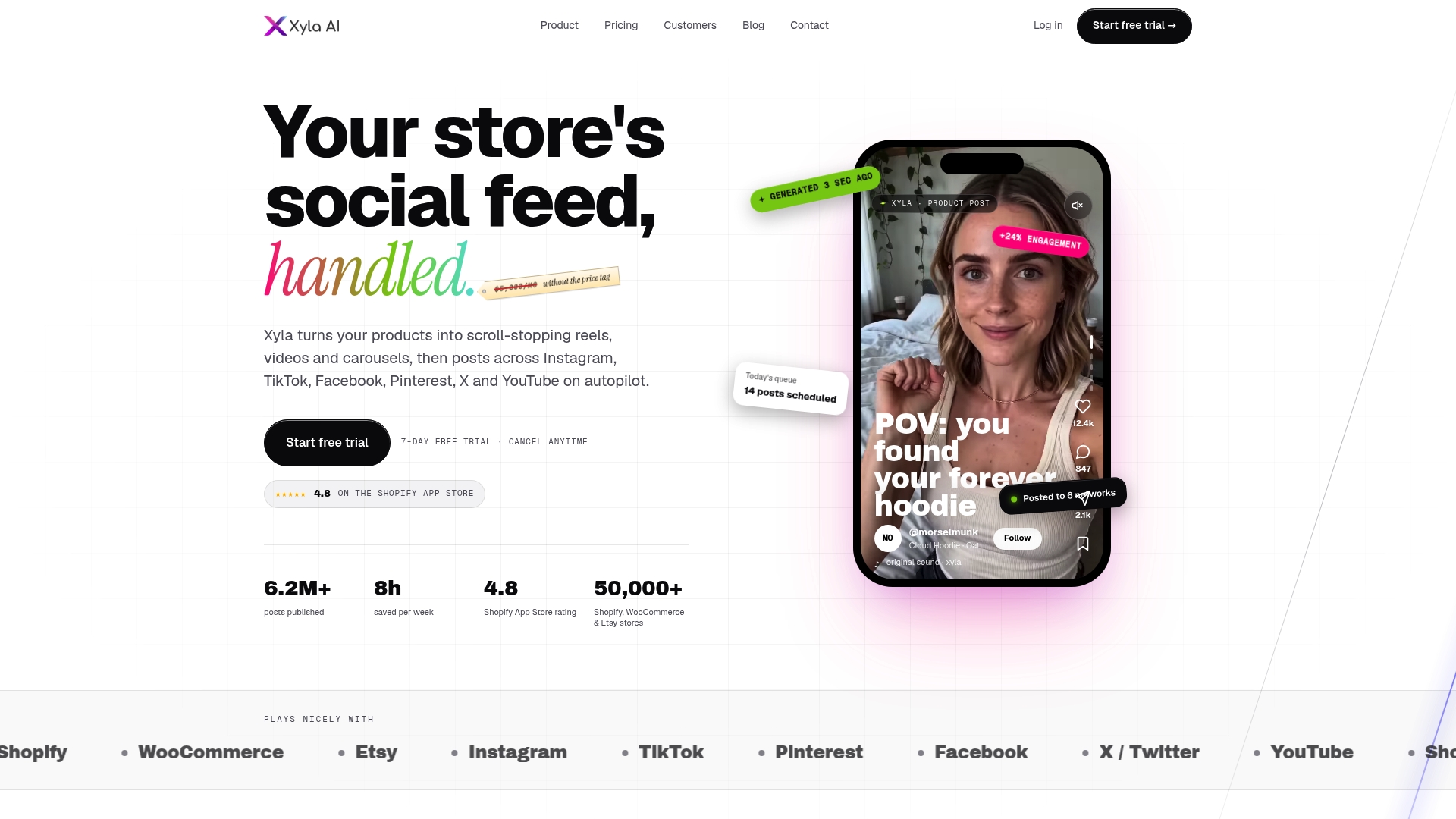
Several steps in the checklist above are exactly where catalog-driven tools save the most manual effort. We built our platform around this gap: it converts product listings into reels, carousels, and short videos automatically, then schedules them across networks without you touching a design tool.
- Catalog-driven content generation replaces the “batch-create assets” step, pulling directly from your Shopify, WooCommerce, or Etsy listings.
- Auto-posting across Instagram, TikTok, and Facebook replaces the “schedule core posts” step without manual cross-platform rework.
- AI-generated captions reduce the drafting time spent on the content templates covered above.
- Store owners using this kind of catalog-driven auto-posting report saving around eight hours a week that would otherwise go to manual content creation.
For a Shopify, WooCommerce, or Etsy store, the fastest path is connecting your catalog before your next holiday push so assets are ready the moment you need to schedule.
Optimizing automated holiday posts for sales, not just reach
A holiday post that gets likes but no clicks has not done its job. The fix starts with the call to action: every scheduled post tied to a promo should link directly to the product or collection page, not just your general storefront.
Product tags matter as much as the caption. A post with shoppable tags on Instagram or Facebook shortens the path from scroll to checkout, which matters more during high-intent shopping weeks than during a normal Tuesday. Pair that with urgency language tied to real deadlines, such as shipping cutoffs, rather than vague countdowns that lose credibility once a reader notices the holiday is still weeks away.
Pricing and promo details should be consistent across every scheduled post in a campaign. A discount code that works on one platform but not another creates the kind of friction that kills a sale mid-funnel. Before you schedule a batch of promo posts, double-check that every linked product page is live, in stock, and reflects the price shown in the post.
Finally, treat your gift-guide and spotlight posts as top-of-funnel and your promo posts as the close. Spacing them so spotlights run early and promos intensify closer to the deadline mirrors how holiday shoppers actually move from browsing to buying.

Working with platform algorithms during peak holiday weeks
Each platform treats holiday content a little differently, and ignoring that costs reach. Instagram and TikTok both tend to favor early engagement, so a post that gets quick comments and shares in its first hour is more likely to keep getting pushed to new viewers, which makes your chosen posting time matter more during a holiday surge than on a normal day.
Facebook’s algorithm leans toward content that keeps people on the platform, so a native video or carousel generally outperforms a post that just links out. Pinterest works on a longer tail: a holiday pin posted weeks in advance can keep surfacing in search well past the holiday itself, which makes it a useful platform for evergreen gift-guide content rather than last-minute promos.
Across every platform, consistency in posting frequency tends to matter more during high-competition weeks, since the algorithm has more fresh content to sort through and rewards accounts that keep showing up. None of this means chasing every algorithm change. It means matching your content format, Reels and Shorts for Instagram and TikTok, native video for Facebook, long-lead pins for Pinterest, to what each platform is already built to promote.

Measuring whether your automated holiday campaign worked
A holiday push that runs smoothly is not the same as one that performs well. Set your benchmarks before the campaign starts, not after, so you are comparing against something real instead of guessing after the fact.
Track engagement rate and click-through rate on your promo posts separately from your awareness posts, since they serve different goals and should not be judged by the same number. For stores, the number that matters most is usually attributed sales or conversions from social traffic, which most ecommerce platforms can tie back to a specific post or campaign link when you use tagged URLs or platform-native shopping links.
Compare this holiday’s numbers against your own last cycle rather than against generic industry claims, since your own historical data reflects your actual audience. After the holiday ends, note which post types, gift guides, spotlights, or UGC reposts drove the most engagement or clicks, and carry that into your template library for the next seasonal push. A short debrief, even fifteen minutes, is usually enough to capture the lessons before the detail fades.
Staying compliant with copyright and disclosure rules
Automated posting does not remove your responsibility for what goes out under your name. Any image, music, or video clip used in a holiday post needs a license you actually hold, whether that is a stock asset, a licensed track, or content generated from your own product photos.
If a post features a partner, influencer, or repurposed customer content, disclose it clearly, since platform rules and many consumer protection regulators require transparency around sponsored or endorsed content. Reposting user-generated content also needs explicit permission from the original creator, not just an assumption that a public post is free to reuse.
Pricing and promo claims in your captions should match what is actually live on your product pages at the moment the post is scheduled to publish, since a discount that expires before the post goes out creates a misleading claim you did not intend. If your automation tool queues posts well in advance, build in a final check close to publish time so nothing goes out with outdated pricing or an expired offer.
Where automation should stop and a human should step in
Automation raises your floor: it keeps your feed active, timely, and on-brand even during a week your team is mostly offline. What it will not do is decide which single post deserves a personal reply or which comment thread needs a real person’s attention instead of a template. Set realistic expectations for how much monitoring your team can sustain, free up the time automation buys you for a handful of genuinely human moments, and measure what actually worked once the holiday has passed.
— Toby
Getting your store ready before the next holiday rush
We built our platform to handle the parts of this checklist that eat the most time: catalog-driven content generation, auto-posting across Instagram, TikTok, and Facebook, and cross-platform scheduling that adapts one asset to each network automatically.
- Connect your store catalog so holiday assets can generate directly from your product listings.
- Review our step-by-step automation guide to set up your posting workflow before your next holiday deadline.
- Check our pricing page for plan details, including the Growth plan from $29 per month, so you know what fits your store before the next seasonal rush hits.
The earlier you connect your catalog, the more holiday content you have ready without touching a design tool at the last minute.
FAQ
Can I set up an automatic email reply for holidays?
Yes, most email providers let you schedule an auto-reply in advance, and Mailchimp’s guidance on auto-reply emails recommends including your return date and an alternate contact. Gmail’s vacation responder and Outlook’s automatic replies both support scheduling this ahead of the holiday itself.
What is the 5 5 5 rule for social media?
Definitions vary across marketers, but one common version suggests reviewing five posts from accounts you follow, engaging with five posts from your own community, and sharing five pieces of your own content, all within a set time window to balance engagement with output. Treat it as a loose habit framework rather than a fixed industry standard.
What is the best scheduling tool for social media posts?
The right tool depends on whether you need general multi-platform scheduling or catalog-driven automation built for ecommerce. Stores running Shopify, WooCommerce, or Etsy often benefit from a tool that pulls directly from product listings, such as our platform, since it removes the manual asset-building step entirely.
What is a holiday post?
A holiday post is any social media update tied to a specific seasonal date or event, covering store hours, promotions, gift guides, or seasonal product features. It is typically planned and scheduled ahead of the holiday itself rather than written the same day.
How far in advance should I schedule holiday posts?
Scheduling core holiday posts one to three weeks ahead gives enough lead time to batch-create assets while leaving room for last-minute manual additions. This window also allows time to double-check that linked promos and pricing are still accurate before each post publishes.


