

Outsource vs Automate Social Media: Which Fits a Store
For most small e-commerce stores, automation is the better first move: it turns the product catalog you already have into a steady stream of posts at a flat monthly price, while outsourcing hands your brand voice to someone who has to learn it from scratch. Outsourcing still makes sense for narrow, specialized jobs. But if your problem is that posts keep slipping because you are busy running the store, you need a system, not another person to brief. That is what we built Xyla to be for Shopify, WooCommerce and Etsy shops.
TL;DR
- Outsourcing means paying a freelancer, virtual assistant or agency to plan, create and post for you. You buy someone else’s hours, and you still spend yours on briefing and approving.
- Automating means software turns your product data into posts and publishes them on a schedule. You buy output, at a predictable price.
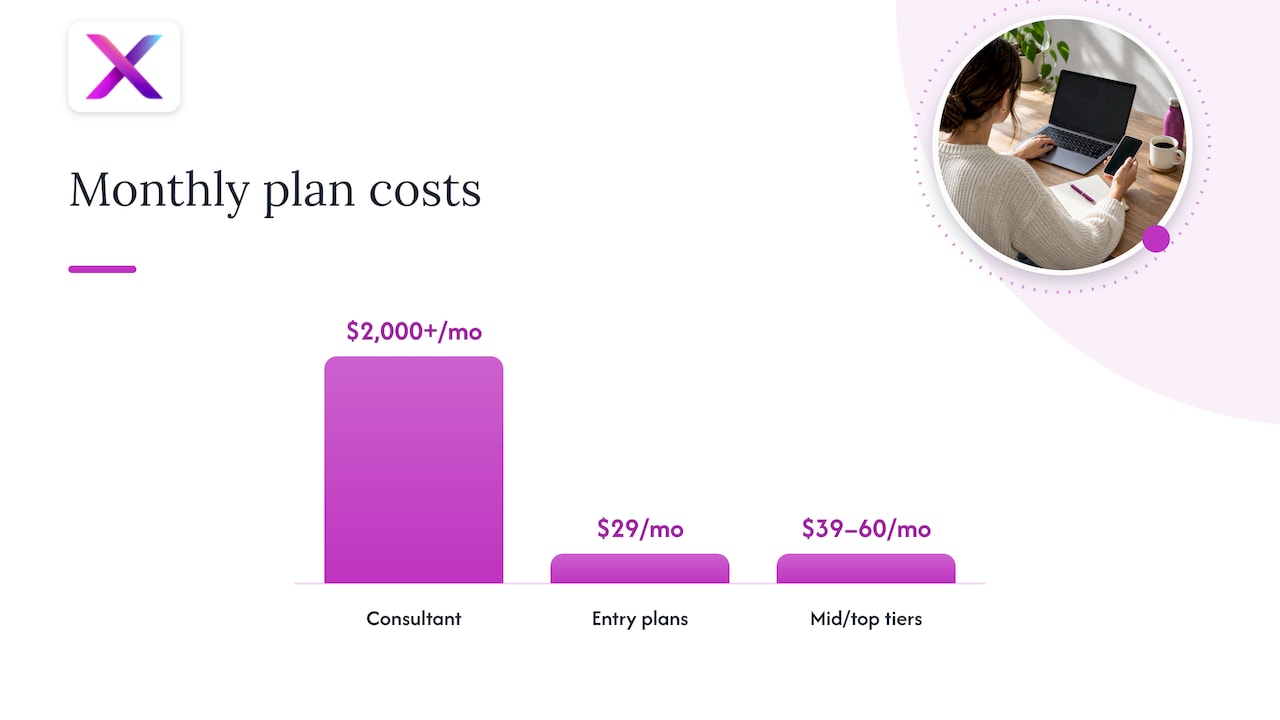
- Consultants can charge $2,000 or more per month for early-stage startups. Xyla plans start at $29 per month.
- The working rule: automate the mechanics (creating, formatting, scheduling, posting), and keep a human checkpoint on judgment (claims, replies, sensitive topics).
- Product-led stores gain the most from automation, because every listing is already raw material for a post.
Table of Contents
- What each option actually involves
- Cost: a retainer against a subscription
- Time: who is waiting on whom
- Brand voice and authenticity
- What to automate and what to keep human
- Where outsourcing still makes sense
- Consistency is the real prize
- A simple way to decide
- Try the automated route
- Our view
- FAQ
- Sources
What each option actually involves
The two words get used loosely, so here is what you are comparing.
Outsourcing means a person or team outside your company does the work. That could be a freelancer, a virtual assistant or a full agency. Typically they plan a content calendar, write captions, design or edit visuals, publish, and sometimes reply to comments. You pay by the hour or by a monthly retainer, and you supply access to your brand, products and goals.
Automating means software does the repeatable parts. A scheduler publishes posts you approved. A more complete tool, like ours, reads your product listings and builds the posts themselves: reels, videos, carousels, quotes, fact cards, holiday posts. It resizes each one for the network it is going to, writes copy, and publishes on a schedule.
The real difference is what you are renting. An agency rents you attention. Automation rents you a process. That single difference drives almost everything below: cost, speed, consistency and control.
Cost: a retainer against a subscription
Outsourcing costs scale with people. Forbes reports that social media consultants can charge $2,000 or more per month for early-stage startups. That is a large number for a store that may be doing a few thousand dollars in monthly sales. And the retainer is not the whole bill. Someone on your side has to brief the agency, approve drafts, send new product photos and answer questions. The same Forbes piece notes that onboarding needs real access to your brand voice, customer data and goals.
Automation costs scale with features. Our plans are listed on our pricing page, and tiers are based on features and usage such as the number of posts and networks:
Where you sell Entry plan Monthly Annual Shopify Starter $29 $209 Etsy Maker $29 $209 Any platform (pricing page) Growth from $29 from $209The mid and top tiers run $39 to $60 per month, or $281 to $432 per year, depending on the plan. Platform-specific plans are on our Shopify and Etsy pages. AI content generation is part of the standard plans rather than a per-generation credit you top up, so the monthly price does not creep as you post more.
If you want to think harder about whether the spend pays back, our guide on whether social media marketing is cost effective walks through the math.
Time: who is waiting on whom
The hidden cost of outsourcing is the loop. You send a product launch to your agency. They draft. You review. They revise. It posts three days later, after the moment has passed. Add a handoff through an account manager and a small change can sit in a queue.
Automation removes the loop for the routine work. Because the posts come straight from your catalog, a new listing can become a post without anyone writing a brief. Our users are typically stores without a marketing team, and the point of the product is to save owners around eight hours a week. If you want to see where those hours go, read why social media takes so much time for businesses and how much time scheduling saves.
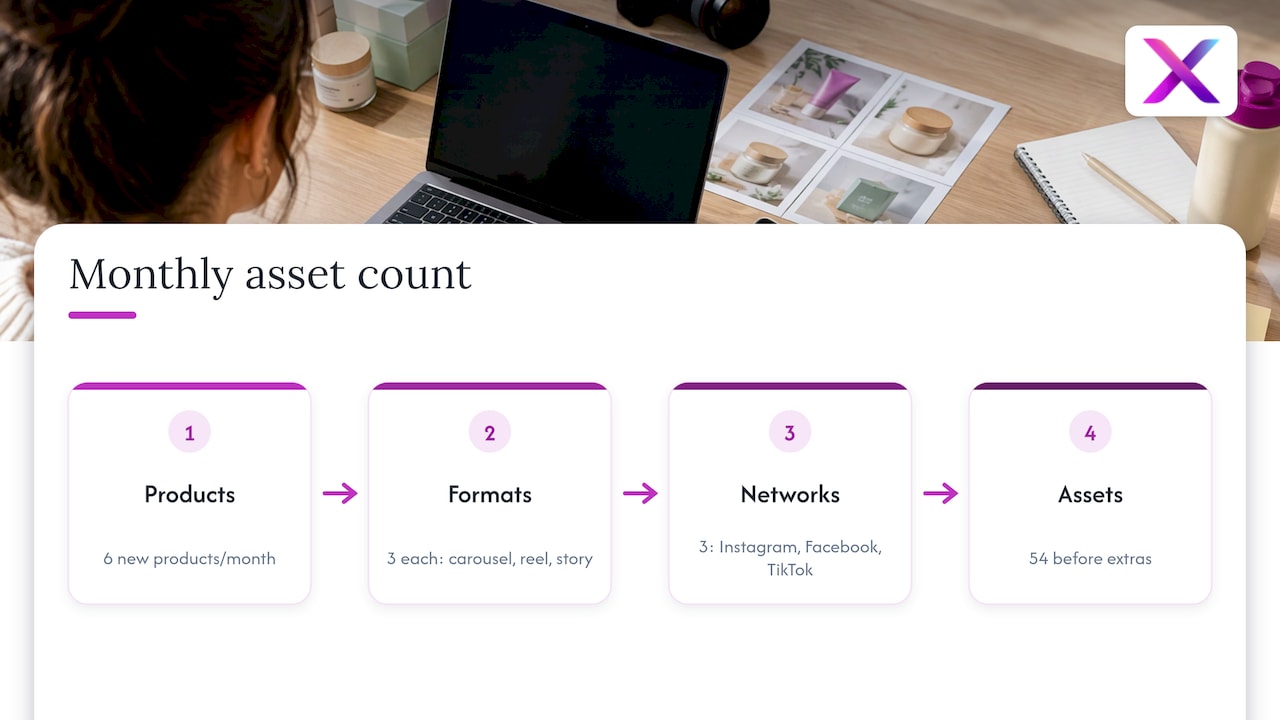
A worked example: suppose you add six new products a month and want each to appear as a carousel, a reel and a story across Instagram, Facebook and TikTok. That is 54 assets before you count holidays and evergreen posts. Done by hand, each needs a design pass, a caption and an upload. Done by an agency, each needs a brief and a review. Done by automation, they are generated from the listings and queued.
Brand voice and authenticity
This is where outsourcing gets its best argument and its sharpest criticism.
The argument: a skilled outsider can bring craft you do not have. Kat Bassett of Seedcamp told Forbes that every hour a founder spends tweaking a caption is an hour not spent on product or sales, and that you only get one shot at introducing your brand.
The criticism: Abi Hill, CEO of Just Starting Out, told Forbes that for the average startup authenticity matters more than polished marketing, and that customers want to hear from the founder. An external consultant finds that hard to convey, she argued.
Both points favor a setup where your own product data, photos and brand voice drive the content, and where you stay in the approval seat. That is how our platform works: it generates new UGC-style video and images from your real product data and writes brand-aligned copy, rather than remixing generic templates. Your catalog is the source, so the posts talk about what you actually sell. Our guide to AI social captions for ecommerce covers how to keep that copy sounding like you.
What to automate and what to keep human
The cleanest way to split the work is by type of task. Mechanical, repeatable jobs go to software. Judgment calls stay with you or a trusted person.
Safe to automate
- Turning product listings into visual posts
- Resizing and formatting each asset for each network
- Scheduling and publishing approved posts
- Recycling evergreen content
- Holiday and seasonal posts planned from a calendar
- Routing link-in-bio traffic and tagging products
Keep a human checkpoint
- Brand positioning and strategy
- Final approval of any claim about a product, such as health, safety or performance
- Replies and direct messages from real customers
- Crisis moments, complaints and anything sensitive
The same idea applies beyond social. Teams that rely on content marketing automation for search content draw the same line: software handles production and publishing cadence, and a person owns strategy and sign-off. For a store, that means you spend ten minutes reviewing a week of queued posts instead of an evening building them.
If you want the full routine, our step-by-step guide to automating social media marketing lays it out.
Where outsourcing still makes sense
Outsourcing is not wrong. It is a fit for specific situations: a three to six month campaign with a clear end, a one-off project that needs specialist skill such as a brand film, or a stretch when you want to test a channel with someone who has done it before. If a job is narrow, temporary and creative, a freelancer can earn their fee.
What does not hold up is outsourcing the everyday engine of a product store: the steady flow of posts about products, collections and seasons. That work is repetitive, tied to your catalog, and needs to run every week without anyone remembering to ask for it. It is exactly the work software does well. A common pattern is to automate the engine and bring in a specialist for one-off creative pushes on top.
Consistency is the real prize
Most stores do not fail at social because the content was bad. They fail because posting stopped during a busy month. Forbes cites research from Just Starting Out finding that 88% of entrepreneurs and new business owners manage their marketing entirely themselves or rely on little more than informal advice. For those owners, the question is rarely agency versus tool. It is tool versus nothing for three weeks at a time.
Automation protects the cadence. Posts are scheduled and published without you opening an app, so a hectic week does not leave a gap. If you are weighing the benefits in detail, see our overview of the benefits of a social media scheduler and the benefits of AI social media marketing.
A simple way to decide
Ask four questions.
- Is most of what you post about products you already list? If yes, automation can generate it from the catalog.
- Do you have a marketing hire or budget for a retainer? If not, a subscription is the realistic path.
- Do you need it to run every week without chasing anyone? Automation does not take vacations or turn over.
- Is the job temporary and specialized? If so, outsource that piece only.
Most owners land on the same answer: automate the engine, keep your own eyes on claims and customer replies, and hire out only the occasional special project.
Try the automated route
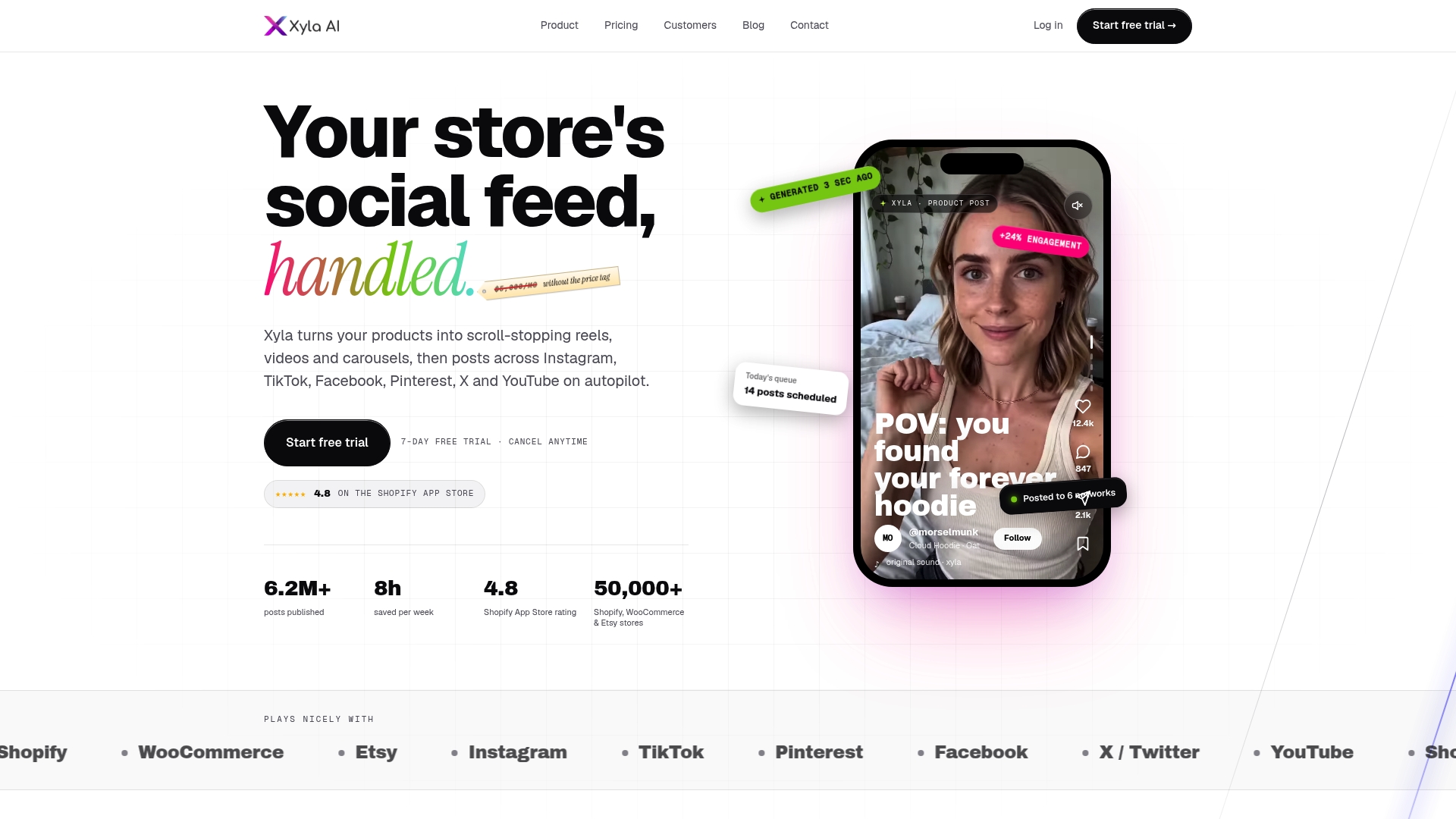
Xyla connects to your Shopify, WooCommerce or Etsy store, turns listings into reels, videos and carousels, tailors them for Instagram, TikTok, Facebook, Pinterest, X and YouTube, and publishes them on a schedule. Plans start at $29 per month, with a free trial before you subscribe. See the Shopify plans, the Etsy plans or the full pricing page.
If you are starting from the store connection, our walkthrough on auto posting from product updates shows the five steps from listing to published post.
Our view
Most store owners we talk to frame this as a choice between paying a person and doing it themselves at midnight. We think that is the wrong pair. The work that eats the week is repetitive: resizing the same product photo five ways, rewriting the same caption for a different network, remembering to post on Tuesday. None of that needs a human, and none of it should cost a retainer.
We built Xyla so that new, modern UGC-style content is generated from your real product data, not recycled from templates. We run full social calendars automatically with deeper catalog integration, and we include AI generation in the standard plans so you are not counting credits before every post. We also support the features that matter to shops, like Instagram Shopping tags and automated link-in-bio routing.
Your judgment is the part worth keeping. You know which claims are true, which customers deserve a personal reply, and what your brand sounds like. Spend your time there. Let the system carry the weekly grind.
Toby
FAQ
Is automating social media cheaper than outsourcing?
For most small stores, yes. Consultants can charge $2,000 or more per month for early-stage startups, while Xyla plans start at $29 per month. Outsourcing also takes your time for briefing and approvals.
Can I automate everything and never look at my accounts?
Automate the mechanics, such as creating, formatting, scheduling and posting. Keep a human checkpoint for product claims, customer replies and anything sensitive. A quick weekly review of the queue is usually enough.
Will automated posts sound like my brand?
Our platform generates brand-aligned copy and builds content from your own product data and photos, so posts reflect what you actually sell. You can review before anything publishes.
Can I combine outsourcing and automation?
Yes. Run the weekly product posting through automation and bring in a specialist only for a defined project, like a seasonal campaign. That keeps your fixed costs low and your feed consistent.


