

Auto Posting: 5 Steps From Store Product Updates to AI Social Posts

Auto posting product updates means your store’s product changes, a new arrival, a restock, a price drop, trigger an automatically generated social post without you opening an editor. Tools like Shopify webhooks catch the change, and publishing layers like the TikTok Content Posting API push the result live. Done right, this setup replaces hours of manual posting with a few minutes of review, and platforms like Xyla AI help Shopify, WooCommerce, and Etsy stores create and publish social content.
TL;DR:
- Use Shopify’s fields_changed event data to filter for shopper relevant changes, skip metadata edits, and add a debounce window to prevent duplicate posts.
- TikTok is asynchronous: provide a public media URL, poll status, use MP4 video or JPEG or WEBP photos, and expect draft mode until audit approval.
- Batch seasonal collections for themed campaigns, but generate individual posts for isolated restocks or price changes that need a quick, targeted update.
- Use a human approval gate for regulated claims, pricing accuracy, or restricted products, and set promotion templates to expire when the offer ends.
- Run one product through the full pipeline as a test, then watch the first live posts closely before allowing unattended publishing.
Table of Contents
- Quick setup checklist: the exact steps to enable auto-posting
- Generate and format social posts from product data using AI repurposing and templates
- Publish and schedule: network differences and the TikTok async/pull model
- Rules and filters to prevent over-posting and noisy updates
- Multi-platform workflows and the adapt and stagger approach
- Why an e-commerce-focused AI posting tool helps
- Handling seasonal, promotional, or limited-time product updates automatically
- Managing compliance and platform policy adherence for automated posts
- Customizing AI-generated content tone and style to match brand voice
- Integrations with other marketing tools or CRM systems for unified campaigns
- What actually matters when you automate product posting
- Try Xyla: automate your product posts without the manual grind
- FAQ
- Sources
Quick setup checklist: the exact steps to enable auto-posting
Getting from zero to running auto posts takes less time than most store owners expect, as long as you follow the steps in order.
- Connect your store or source: authorize OAuth or an API key for Shopify, WooCommerce, or Etsy, or point the tool at an RSS feed or CSV if your catalog lives elsewhere.
- Pick your triggers: decide whether new products, meaningful edits, restocks, or inventory thresholds should fire a post, then map each product field to a content template.
- Build post templates: set up image and video formats, caption structures, call-to-action lines, and shopping tags for each platform you post to.
- Set scheduling rules: choose posting windows, stagger timing across platforms, and add a review or approval gate if your team wants eyes on content before it goes live.
- Run a sandbox test: publish one test product through the full pipeline and watch the first few live posts closely before letting it run unattended.
Once that first batch posts cleanly, the system mostly runs itself, though it’s worth checking in regularly at first.
Generate and format social posts from product data using AI repurposing and templates
Turning a product record into a finished post works best when you pick the right repurposing depth for the update. Platforms offering AI repurposing typically support a few distinct modes:
- Social-only extract: pulls existing product copy and images into a platform-ready post fast, ideal for routine restocks.
- Update or refresh: makes light edits to an existing post or template when only one or two fields changed, like a price adjustment.
- Full rewrite: generates entirely new copy, hooks, and visual framing for a true relaunch or seasonal refresh.
Industry tools like Postibo describe this same three-tier structure, separating light-touch updates from deeper, research-driven rewrites.
From a single product, a well-built pipeline can generate several assets at once: a short UGC-style video clip, an image carousel and caption variants for A/B testing. AI templates handle the repetitive parts, caption hooks, short-form video scripts, carousel frame sequencing, and CTA phrasing, while leaving room for human review.
Batch processing makes sense for seasonal catalog refreshes or collection launches, where you want dozens of products converted at once. Single-item generation fits better for one-off restocks or price changes that need a quick, isolated post.
Publish and schedule: network differences and the TikTok async/pull model
Each social network handles automated publishing differently, and the gaps matter more than most setup guides admit.
- Direct publish vs. draft mode: some integrations push content live immediately, while others land in an inbox or draft folder for manual approval, which matters for teams that want an audit step before anything goes public.
-
TikTok’s async model: the Content Posting API is fully asynchronous. Your app initializes a publish with a public media URL, TikTok pulls the file, and you poll for status until it reports
PUBLISH_COMPLETE. Accepted formats are strict: video must be MP4, and photos must be JPEG or WEBP, since PNG gets rejected outright. - Audit restrictions: TikTok’s Content Posting API requires OAuth 2.0, specific permission scopes, and a separate audit before public posts go live; apps that haven’t passed that audit are often restricted to inbox or draft mode.
Common pitfalls include expired pre-signed media URLs, redirect chains that break TikTok’s pull request, and mismatched file formats. Services like PostPeer handle the OAuth flow, multi-step upload, and audit-aware fallback to draft mode so testing doesn’t require passing the audit first.
Statistic Callout: Audio repurposing tools claim they can cut editing and repurposing effort by more than half when teams automate the conversion of product content into campaign-ready assets. That kind of time recovery is exactly what makes scheduling rules worth setting up properly from the start.
For scheduling itself, keep timing zone-aware so posts land during your audience’s active hours, and stagger launches across platforms instead of firing everything simultaneously, which reduces the odds of tripping spam flags and keeps your feed from feeling repetitive.
Rules and filters to prevent over-posting and noisy updates
A posting pipeline without filters turns into a noise generator fast. A few rules keep output clean:
- Require substantive field changes: skip posts for metadata-only edits like internal tags or SEO descriptions that shoppers never see.
- Debounce rapid edits: set a minimum time window before the same product can trigger another post.
- Hold out-of-stock or draft items: auto-skip or queue these rather than posting about something customers can’t buy.
- Catch duplicates: use simple image hash or caption similarity checks to stop the same update from posting twice across triggers.
Pro Tip: A debounce window can catch accidental duplicate triggers without delaying genuinely new announcements.
Multi-platform workflows and the adapt and stagger approach
One product update doesn’t have to mean one post. It can become a small campaign if you adapt the format per platform and stagger the release.
- Adapt: build a short video for TikTok, a multi-image carousel for Instagram, and a simple image-plus-link post for Facebook or Pinterest from the same product data.
- Stagger: spread posts across a window instead of publishing everywhere at once, which tends to extend reach rather than front-loading it all in one burst.
- Batch vs. continuous: batch-process entire collections for seasonal launches, but let catalog updates like restocks post continuously as they happen.
Where supported, attach shopping tags or route traffic through a link-in-bio setup so a scroll-to-purchase path exists on every post. Our adapt and stagger workflow guide walks through this pattern in more detail.
Why an e-commerce-focused AI posting tool helps
We built Xyla AI to turn Shopify, WooCommerce, and Etsy product listings directly into visual content, then post it automatically across Instagram, TikTok, and Facebook. Store owners who automate this way can save time previously spent on manual content creation and posting. For setup details, our Shopify integration guide and automation walkthrough cover the steps in order.
Handling seasonal, promotional, or limited-time product updates automatically
Seasonal and promotional updates behave differently than routine catalog changes, and treating them the same way usually produces flat, generic posts. A holiday collection launch or a flash sale needs its own trigger logic, separate from the standard restock or price-change rules.
Set up a distinct template set for time-boxed campaigns: countdown-style captions, urgency-driven CTAs, and visuals that reference the specific occasion rather than generic product shots. Tie these templates to a start and end date so the automation naturally switches back to standard posting once the promotion closes, instead of continuing to post “limited time” language on an item that’s been back to regular price for weeks.
Batch processing fits seasonal campaigns particularly well, since you’re often converting dozens of products into a themed push at once rather than reacting to one-off changes. Our holiday post automation playbook covers this batch approach from catalog pull through to comment management.
For flash sales or limited drops, debounce rules may need a shorter window than your default setup, since these items change status quickly and a long hold could miss the relevant posting window entirely. Build a separate rule set for these fast-moving campaigns rather than forcing them through your standard filters, and make sure the review gate, if you use one, can clear a promotional post quickly enough to matter before the sale ends.

Managing compliance and platform policy adherence for automated posts
Automated posting doesn’t exempt you from each platform’s advertising and content policies, and enforcement doesn’t slow down just because a human didn’t click publish. TikTok, for instance, requires apps to pass a separate Content Posting audit before they can publish publicly; until that audit clears, posts are often restricted to draft or inbox mode rather than going live automatically.
Build a review gate into your pipeline for anything touching regulated claims, pricing accuracy, or restricted categories like health, finance, or alcohol products. An automated caption generator doesn’t know your local advertising rules, so a human check before publish catches issues the AI can’t.
Keep your OAuth scopes and permissions current. Platforms periodically update their API requirements, and a pipeline running on stale permissions can silently stop posting or get flagged for review. Checking connection status monthly avoids discovering a broken integration weeks after it stopped working.
Finally, match product data accuracy to what you’re posting. If a Meta catalog feed is involved, the product ID needs to exactly match the content ID used by the Meta Pixel, or dynamic retargeting on those posts will fail even when the catalog itself looks fully synced. Compliance here isn’t just about avoiding penalties, it’s about making sure the automation you built actually performs the way it’s supposed to.

Customizing AI-generated content tone and style to match brand voice
Generic AI copy is the fastest way to make automated posts feel like automated posts. The fix isn’t more oversight, it’s better input at the template stage.
Start with a brand voice reference: a handful of your best-performing captions, your preferred CTA phrasing, and a short list of words or phrases you never use. Feed that into your template settings so every generated caption pulls from the same voice instead of defaulting to generic marketing language.
Adjust tone per platform rather than using one voice everywhere. A TikTok caption built around a short-form video script can run casual and quick, while a Facebook post attached to a product link often reads better with a slightly more complete sentence structure. Keeping one brand voice but letting its expression shift by platform tends to perform better than forcing identical copy across every network.
Review your first few weeks of auto-generated posts closely, then adjust your templates based on what actually sounds like you. Most platforms let you edit the underlying prompt or template, not just the output, so fixing a recurring tone mismatch at the template level saves you from editing every single post by hand.
Visual consistency matters just as much as caption tone. If your generated carousels or video clips use fonts, colors, or layouts that don’t match your existing brand kit, viewers notice the mismatch even if they can’t name what’s off.
Integrations with other marketing tools or CRM systems for unified campaigns
Auto-posted product updates work best when they connect to the rest of your marketing stack instead of running in isolation. A product restock that triggers a social post can also trigger an email flow, a CRM tag update, or a retargeting audience refresh, if the systems are wired together.
Most auto-posting tools expose either native integrations or webhook-based connections to email platforms and CRMs, letting a single product event fan out to multiple channels at once. This matters most for stores running coordinated campaigns, where a social post, an email sends, and an ad refresh all need to reference the same product and the same messaging at roughly the same time.
For broader content and SEO coordination beyond social, some stores pair their auto-posting setup with a content automation platform like Babylove Growth, which handles keyword planning and publishing schedules across blog and search content, giving a fuller picture of how automated content workflows scale across channels.
Keep campaign tracking centralized wherever possible. If your social posts, emails, and ads all reference the same product but log performance in separate dashboards, you lose the ability to see which channel actually drove the sale. A shared UTM structure or a connected analytics layer solves most of this without needing a full marketing stack overhaul.
What actually matters when you automate product posting
The webhook and API setup gets most of the attention in guides like this one, and it matters, but it’s not where most stores lose time after launch. The real bottleneck is filtering: deciding which product changes are worth a post at all. Store owners who skip that step end up with feeds full of restock noise and metadata-driven posts that quietly train their audience to scroll past.
The conventional advice treats auto-posting as a publishing problem: connect the API, pick a schedule, done. It’s actually an editorial problem wearing a technical costume. The debounce windows, duplicate detection, and field-change filters are the parts that determine whether automation makes your social presence look more consistent or just more repetitive.
If you’re setting this up for the first time, focus on tuning filters and templates before chasing every platform’s publishing quirks. Get the signal-to-noise ratio right before you worry about staggering posts across multiple platforms.
— Toby
Try Xyla: automate your product posts without the manual grind
We built Xyla AI to take a product listing from Shopify, WooCommerce, or Etsy and turn it into platform-ready visual content, then post it automatically across Instagram, TikTok, and Facebook.
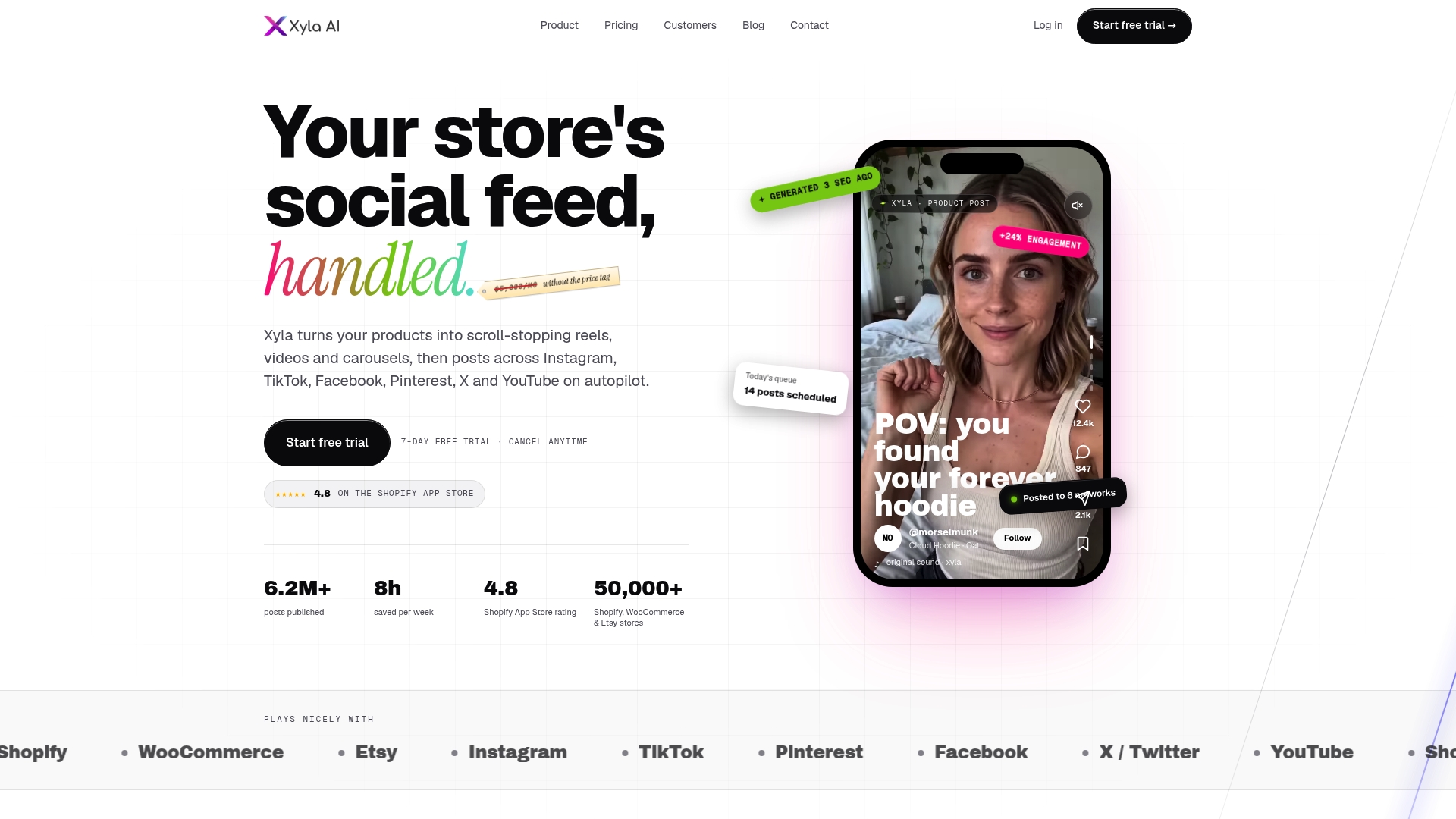
- Connect your store once and let product changes generate reels, carousels, and captions without manual editing.
- Review and approve posts before they go live, or let routine updates publish on their own.
- Check pricing or start with our step-by-step automation guide to see how setup fits your catalog.
FAQ
What does “auto post product updates” actually mean?
It means a product change, like a restock, new listing, or price drop, automatically triggers a social media post without you writing or scheduling it manually. The system watches for the change, generates platform-formatted content, and publishes it based on rules you set in advance.
Do I need developer skills to set up auto-posting?
Not if you use a dedicated tool that handles the API and webhook connections for you; most platforms offer OAuth-based store connections that take a few minutes to authorize. Writing your own integration from scratch does require familiarity with webhooks and REST APIs, particularly for platforms like Shopify.
Why does TikTok take longer to publish than other platforms?
TikTok’s Content Posting API is asynchronous: your system provides a public media URL, TikTok pulls the file, and you have to poll for status until it confirms the post is complete. Apps also need to pass a separate content posting audit before they can publish publicly, which can mean an initial delay before live posting is enabled.
How much time does auto-posting actually save?
Store owners who automate social posting around product updates can save time compared to manual content creation and scheduling. The exact savings depend on how many products you manage and how many platforms you post to.
How do I stop auto-posting from flooding my feed with minor updates?
Filter triggers so only meaningful field changes, like price, availability, or title, generate a post, and skip metadata-only edits entirely. Adding a debounce window between posts for the same product, and checking Shopify’s fields_changed data before posting both help keep the noise down.
Sources
Webhooks are the most reliable way to catch product changes the moment they happen. Shopify supports subscribing to product events, including create, update, and delete, and recommends pulling the fields_changed list with each event so your system knows exactly which fields moved without re-fetching the whole product record. WooCommerce and Etsy offer similar event or feed options, though depth varies by platform.
RSS or CSV imports still make sense for legacy setups or bulk catalog changes where webhook infrastructure isn’t practical.
Not every field change deserves a post. Focus on the ones that matter to shoppers:
- TikTok Content Publishing API: Videos, Photo Carousels & the Async Publishing Dance | PostPulse Blog
- TikTok Content Posting API: Requirements & Setup (2026)
- How to Post on TikTok With an API in 2026 (Step-by-Step) | PostPeer Blog
- AI Video Repurposing for Product Marketing | Parmonic
Most automated systems rely on Shopify’s products/create and products/update webhooks, and a common pitfall is skipping the filter step: without one, metadata-only edits trigger excessive, repetitive posting.
Pro Tip: Filter on fields_changed before you filter on anything else. It’s the cheapest way to cut noise before it ever reaches your content templates.


