

Autopost Etsy Listings to Facebook Without Losing Share & Save

Yes, you can automate posting Etsy listings to a Facebook Page, and for most sellers the fastest, lowest-maintenance route is a dedicated e-commerce autoposter that builds platform-ready visuals for you, like Xyla. Native sharing works but takes manual effort every time. General automation tools need field mapping and regular upkeep. A dedicated autoposter handles the creative and timing on its own.
TL;DR:
- Native sharing suits occasional posts, while workflow automators require field mapping and troubleshooting when Etsy or Facebook changes listing data.
- For Share & Save credit, copy trackable links from Shop Manager, avoid URL shorteners, and ensure buyers purchase within 30 days of clicking.
- Automation tools generally connect to a Facebook business Page, and sellers should test draft links because middleware can strip or rewrite tracking parameters.
- Rotate images, carousels, and videos, track clicks in Facebook Page Insights and orders in Etsy Shop Manager, and review performance every few weeks.
Table of Contents
- Practical methods to autopost Etsy listings to Facebook
- Step-by-step setup for a working autopost workflow
- Etsy’s money-sensitive rules: Share & Save and Offsite Ads
- Creative, cadence, and tracking that make autoposts convert
- Why automation still needs a human check-in
- Getting autoposting right with Xyla
- FAQ
- Sources
Practical methods to autopost Etsy listings to Facebook
Your choice depends on how much time you want to spend setting things up versus maintaining them.
Native Etsy share buttons are the simplest option. You open a listing in Shop Manager, click share, and post it to your Facebook Page manually. This works fine if you list new products occasionally and want full control over wording, but it does not scale past a handful of posts a week.
Workflow automators like Zapier, Make, or IFTTT-style applets trigger a Facebook post whenever a new Etsy listing event fires. They are flexible and often free to start, but you have to map image URLs, titles, and prices yourself, and those mappings break when Etsy or Facebook changes a field.
Dedicated e-commerce autoposters sync your catalog directly, schedule posts in advance, and auto-format images for Facebook’s aspect ratios. They need less fixing once set up.
AI-driven autoposters like Xyla go a step further: they turn your listing photos into reels, carousels, or short videos, write captions, and publish across networks on a schedule, so you are not assembling each post by hand; to further maximize your ecommerce success, consider strategies from content marketing for ecommerce to expand your reach.
- Native share: best for low volume and full manual control.
- Workflow automators: best for sellers comfortable with field mapping and occasional troubleshooting.
- Dedicated autoposters: best for consistent catalog syncing with less upkeep.
- AI autoposters: best for sellers who want creative and scheduling handled automatically.
Step-by-step setup for a working autopost workflow
Whichever automation platform you choose, the underlying setup follows the same logic. Here is a sequence you can work through today.
- Confirm your Facebook Page is a business Page, not a personal profile, since most automation tools and APIs only connect to Pages.
- Check your Etsy Shop Manager is fully set up, including active listings with clear photos, since blurry or cropped thumbnails post just as poorly through automation as they would manually.
- Decide your link type: a single listing link for a specific item, or your shop’s trackable link when you want broader browsing. Etsy’s Seller Handbook notes there is no built-in autopost feature, so sellers need to supply their own trackable links to drive traffic they can measure.
- Create the trigger in your chosen tool: a new listing, a restocking, or a scheduled recurring post, and map the image URL, title, price, and link into the post fields.
- Write a caption template you can reuse: a hook, one product detail (material, size, or gifting use), a price or call to action, and your Etsy trackable link.
- Add UTM parameters to the link for your own analytics, on top of Etsy’s native tracking.
- Choose a schedule: post immediately for new listings, queue a batch for the week, or set recurring reposts for evergreen items, and throttle frequency so your Page does not look like a spam feed.
- Preview the post before it goes live, checking that the image crops properly and the link preview shows the right title and thumbnail.
- Test a click on the link yourself to confirm it lands on the correct listing and that tracking parameters survive the trip through your automation tool.
- Monitor your first few live posts for a week, adjusting the caption template or image format if engagement looks off.
Pro Tip: Always test your Etsy-generated share link in a draft post first. Some automation middleware strips or rewrites tracking parameters, which quietly costs you attribution.
Etsy’s money-sensitive rules: Share & Save and Offsite Ads
Autoposting only pays off if you keep the fee benefits Etsy already offers for driving your own traffic.
The Share & Save program refunds a percentage of eligible order totals when a buyer purchases within 30 days of clicking a trackable link you shared from Shop Manager, so generating that link correctly matters more than almost any other step in your workflow.
- Always copy your shareable links directly from Shop Manager, not from your shop’s public browser URL.
- Use either your standard
yourshopname.etsy.comformat or a properly forwarded custom domain, since non-standard links may not qualify for attribution. - Avoid pasting links through URL shorteners or third-party redirectors that Etsy cannot trace back to your original share link.
Offsite Ads work differently: Etsy may independently advertise your listings on external networks, including Facebook, and charges a fee only when a sale results from that ad click within 30 days. That program runs separately from anything you post yourself, so autoposting your own trackable links is not redundant with Offsite Ads. It is a parallel channel you control directly.
Creative, cadence, and tracking that make autoposts convert
The format you choose shapes how much attention a post gets. A single image works for a quick restock announcement. A carousel suits a listing with several angles or color options. A short video or UGC-style clip tends to pull more engagement than a static photo, since it holds attention longer in the feed.
Etsy’s own Seller Handbook recommends adding context, like materials or gifting occasions, rather than posting a bare product link, since curated details read as more genuine and tend to earn more clicks.
- Hook first: lead with what makes the piece interesting, not just “new listing.”
- One product detail: mention a material, size, or use case, not every spec.
- Price and CTA: state the price plainly and tell people where to buy.
- Trackable link: always your Share & Save link, with UTMs layered on for your own reporting.
Track results on both ends: Facebook Page Insights for reach and clicks, Etsy Shop Manager for order attribution. Vary your captions and creative when reposting older listings so your Page does not feel repetitive, and space out posting frequency to avoid wearing out your followers.
Pro Tip: Rotate between image, carousel, and video formats across a week instead of repeating the same layout, since Facebook’s feed ranking tends to favor variety from a single Page.
Why automation still needs a human check-in

Automating your Etsy posts to Facebook gives back real time, often hours a week that used to go into manual screenshots and copy-pasting links. That part is not in question. What surprises a lot of sellers is that automation does not mean “set it and forget it forever.”
Facebook’s feed algorithm shifts periodically, and a caption template or posting cadence that worked well in January can go quiet by summer. Automation handles the repetitive labor. It does not handle the judgment calls: which product angle to feature next, when a caption has gone stale, whether a format is still landing. Build in a short review every few weeks, and treat automation as a foundation for testing, not a finished strategy.
— Toby
Getting autoposting right with Xyla
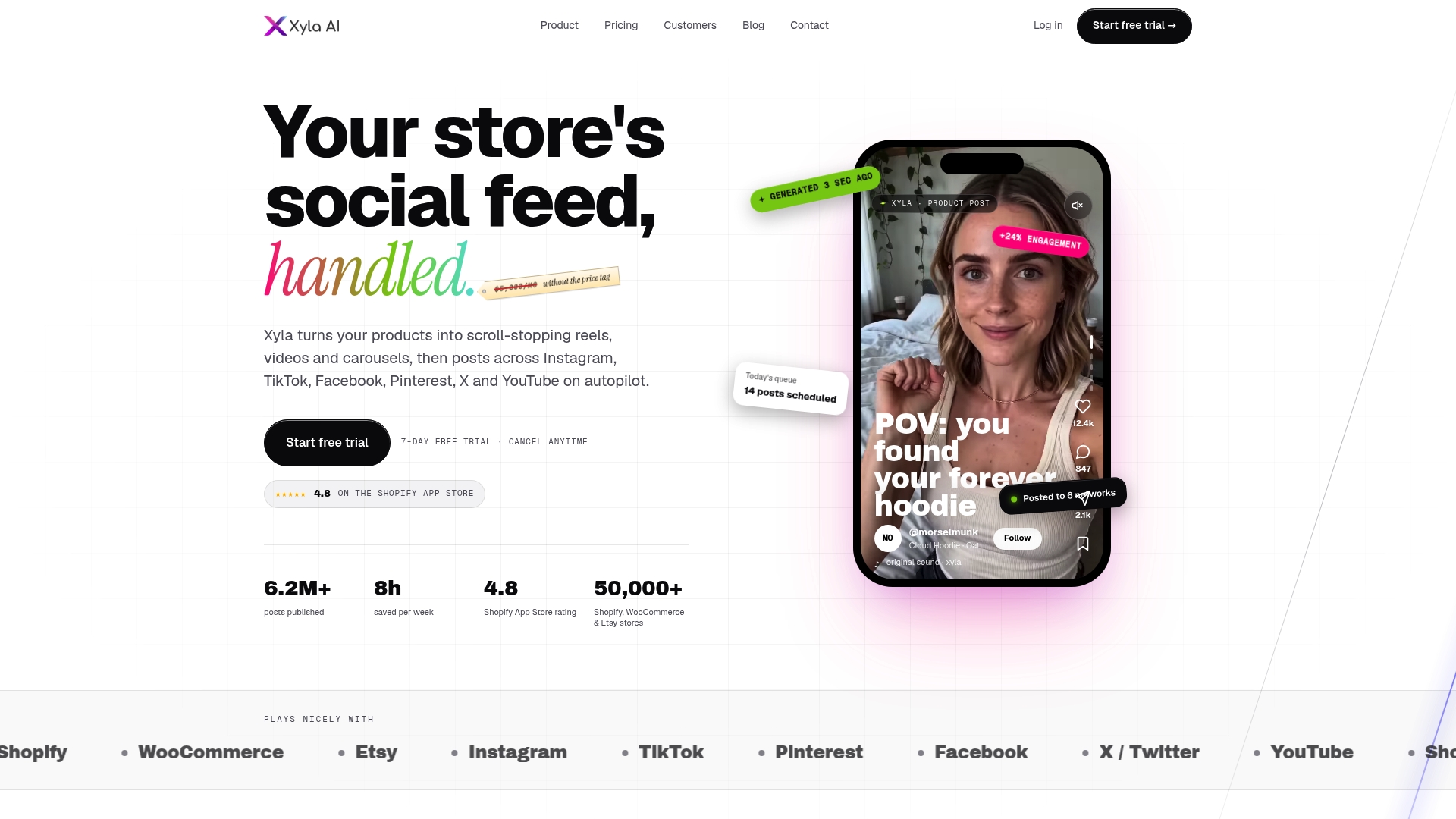
We built Xyla to handle the part of this workflow that eats the most time: turning a product photo into something worth posting. Instead of mapping fields into a generic template, we transform your Etsy listings into reels, short videos, and carousels, write the caption, and publish to Facebook on a schedule that fits your shop.
- We convert listing photos into platform-ready video and carousel content automatically.
- We schedule and publish posts across Facebook and other networks without manual uploads each time.
- We help sellers save time that used to go into manual posting and content creation.
If you are currently relying on Zapier-style triggers or native sharing and want the creative side handled too, our Etsy product page walks through how the integration works, and our pricing page lists current pricing details. Start a trial and see your first week of posts go out on their own.
FAQ
How do I advertise Etsy listings on Facebook?
You can advertise listings through Etsy’s own Offsite Ads program, which may place your products on Facebook and charges a fee only when a sale results from the ad click within 30 days. Separately, you can post your own trackable links organically or run your own Facebook ad campaigns pointing to those same links.
Is Etsy still worth selling on going into 2026?
Whether Etsy is worth it depends on your margins, niche, and how much outside traffic you bring in, since fees and marketplace competition vary by category. Programs like Share & Save and Offsite Ads are designed to help sellers who actively market their own shops rather than relying on marketplace search alone.
Why are some sellers leaving Etsy?
Sellers who leave typically cite rising fees, increased competition within categories, or a preference for owning their customer relationships outside a marketplace. Many who stay offset these concerns by driving their own traffic through trackable links and social channels like Facebook to reduce reliance on Etsy’s internal search.
How much does Etsy take from a $1,000 sale?
Etsy’s transaction and payment processing fees vary by country and are documented on Etsy Help, so the exact amount depends on where your shop is based. Sellers using Share & Save trackable links can recover a portion of eligible order totals through Etsy’s refund program, which offsets some of those costs on orders driven by their own shared links.
Sources
- How to market your business on Facebook — Etsy Seller Handbook
- How to Save on Etsy Fees with the Share & Save Program – Etsy Help


