

Scale Ecommerce Sales With YouTube Shorts Without a Video Team

Use YouTube Shorts as a discovery-plus-shopping surface: publish native vertical product Shorts, tag the primary product, and run short Video Action or Demand Gen buys to convert views into add-to-cart. Pairing native creative with Shopping stickers and targeted ad formats tends to improve product discovery and lower cost per acquisition compared with running polished horizontal ads alone.
TL;DR:
- Shorts should be prioritized as a discovery tool first, with a focus on native vertical creative rather than repurposed horizontal ads.
- Tag the most important product first in each Short, as only the first tagged item appears as the clickable Shopping sticker, and monitor click analytics weekly.
- Use proven creative formats like product demos, how-to guides, and unpolished testimonials, with fast-paced editing to maximize engagement.
- Run paid Shorts campaigns using Video Action or Demand Gen goals, starting small with multiple creative variants and scaling based on sticker clicks and add-to-cart rates.
- Focus on key KPIs such as view-through rate, sticker click rate, and conversion metrics, linking YouTube Analytics, Google Ads, and GA4 for accurate attribution.
Table of Contents
- Why Shorts matter for ecommerce in 2026
- High-converting creative formats and templates for ecommerce Shorts
- YouTube Shopping, product tagging, and how to make tags drive purchases
- When to use organic Shorts vs. Shorts ads
- Measurement: the KPIs and attribution setup that matter
- Working with creators and using creator assets in Shorts
- Designing Shorts series and launch playbooks to build momentum
- Practical production and publishing checklist
- How automation speeds Shorts production and keeps it native
- Three realistic expectations for brands starting with Shorts
- How Xyla helps ecommerce teams produce and scale Shorts
- FAQ
- Sources
Why Shorts matter for ecommerce in 2026
Shorts has moved from a brand-awareness afterthought to a real shopping surface. YouTube now lets eligible creators and merchants attach a Shopping product sticker directly to a Short, so a viewer can tap and land on a product page without leaving the watch flow. Demand Gen and Video Action campaigns extend that same tagging into paid placements, which means a single vertical asset can work organically and as an ad.
Shorts also sits earlier in the funnel than most ecommerce teams assume. It is where someone first notices a product, not where they make a final decision, so the job of a Short is to spark curiosity and make tapping the sticker feel obvious.
What this means for your 2026 plan:
- Treat Shorts as a discovery channel first, a conversion assist second.
- Build native vertical creative instead of repurposing horizontal ads as an afterthought.
- Connect your store early so tagging and ad buying are ready before you scale output.
High-converting creative formats and templates for ecommerce Shorts
Three formats consistently carry the weight for ecommerce Shorts, and each has a repeatable structure.
- Elevator demo. Hook in the first two seconds with the product solving a visible problem, show it working for 10 to 20 seconds, then close on a simple CTA and the tagged product.
- How-to or use-case. Open with the exact gap a buyer has (“still folding laundry by hand?”), walk through the fix using the product, and land on the sticker as the natural next step.
- UGC-style testimonial or unboxing. Keep it handheld and unpolished, let a real reaction carry the middle, and avoid a hard sell at the end since the format works because it does not feel like an ad.
Shot lists stay simple: one establishing shot, one close-up on the product detail that matters, and one reaction or result shot. Pacing should cut every 2 to 3 seconds in the opening third, since Shorts recently added double-speed playback and other feed changes that reward punchier, faster edits.
Pro Tip: Script your first line before you script anything else. If the hook doesn’t survive being read out loud in under three seconds, rewrite it.

YouTube Shopping, product tagging, and how to make tags drive purchases
Shopping tags only work once your store is connected. Eligible creators link a supported platform such as Shopify, then tag products directly in the Shorts upload flow. YouTube supports tagging up to 60 products per video, but only the first product in that list becomes the visible sticker on a Short, so order matters more than quantity.
A short operational checklist:
- Connect your store through Shopify integration or your platform’s supported flow before you start tagging.
- Tag the product you most want featured first, since it becomes the sticker shown to viewers.
- Reorder or resize the sticker in the mobile app if a different product should lead.
- Check tagging analytics in YouTube Studio weekly to confirm sticker clicks are tracking with views.
Inventory and localization affect what buyers actually see. YouTube matches tagged products to local merchants where possible, so a Short can show different availability depending on the viewer’s region, and out-of-stock items can quietly break the shopping experience if your catalog sync lags.
When to use organic Shorts vs. Shorts ads
Organic Shorts build the content library and test which hooks earn watch time. Paid Shorts take the winners and put budget behind them. Google Ads supports Shorts placements across several campaign types: Video reach campaigns with Efficient reach for broad awareness, Video Action campaigns for direct response, Demand Gen for discovery-led shopping behavior, and Performance Max when you want automated placement across YouTube alongside other inventory.
Match the campaign type to the goal:
- Use Video reach (Efficient reach) when the objective is awareness at low cost per view.
- Use Video Action or Demand Gen when the objective is clicks, add-to-cart, or purchases.
- Use Performance Max when you want YouTube inventory blended into a broader cross-channel buy.
For buying tactics, submit both vertical and horizontal assets where the campaign allows it, since Google Ads guidance notes that adding vertical creative increases reach specifically on Shorts inventory. Start with a modest test budget across two or three creative variants, run each for at least a week, and use Reach Planner before committing to a larger buy.
Measurement: the KPIs and attribution setup that matter
Five numbers tell you whether Shorts are working: view-through rate, sticker click rate, add-to-cart rate, conversion rate, and cost per acquisition. View-through rate tells you if the hook holds attention; sticker clicks tell you if the product and placement are compelling; the rest tell you whether that attention turns into revenue.
One documented result: a YouTube for Business case study found that Video Action campaigns on Shorts helped the ecommerce brand Cider achieve a significantly lower cost per acquisition when vertical creative was paired with audience targeting.
To credit Shorts properly, connect YouTube Analytics, Google Ads conversion tracking, and GA4 so sticker clicks and ad conversions resolve back to the same purchase events. Run creative A/B tests on the hook only, holding the rest of the Short constant, and treat anything that lifts sticker click rate by a visible margin as a candidate to push into paid.
- Watch view-through rate as your first signal of hook quality.
- Track sticker clicks separately from general engagement metrics.
- Compare add-to-cart rate across creative variants before scaling budget.
Working with creators and using creator assets in Shorts
Creator-made Shorts often outperform in-house edits because they already look native to the feed. Brief creators around a single product benefit, ask for a visible unboxing or use moment, and request the raw vertical file so you can add tagging and resubmit it as an ad if it performs.
- Confirm usage rights in writing before repurposing creator content into paid campaigns.
- Ask creators to tag the product directly where their account supports it, or supply the asset for you to tag.
- Track creator-sourced Shorts against in-house Shorts using the same KPI set so you can compare fairly.
Designing Shorts series and launch playbooks to build momentum
A series works better than one-off posts because it gives viewers a reason to come back.
- Tease the next drop or topic in the final seconds of the current episode.
- Show the product or use-case in the next episode’s opening five seconds.
- Deliver value, whether that is a tip, comparison, or result.
- Close with the CTA and tagged sticker.
For a product launch, post a teaser Short the week before, a launch-day Short with the sticker live, and two or three follow-up Shorts answering common questions, then retarget viewers who watched past the halfway point with a Video Action ad.
Practical production and publishing checklist
- Pick the product and confirm it is tagged and in stock before scripting anything.
- Write the hook first, then shoot in 9:16 with good lighting and a close-up on the key feature.
- Keep on-screen text large and placed away from the bottom sticker zone.
- Publish, tag the product, confirm it shows as the sticker, and check analytics within 48 hours.
Pro Tip: Batch-shoot three hooks for one product in a single session so you always have a backup when one underperforms.
How automation speeds Shorts production and keeps it native
Producing enough Shorts to test hooks weekly is the real bottleneck for most small ecommerce teams. Automated tools like Xyla’s AI UGC video generation turn existing product photos into vertical, feed-ready video and handle scheduling and captioning, which keeps output consistent without requiring a dedicated video editor.
Three realistic expectations for brands starting with Shorts
In months zero through three, test hooks and tagging placement relentlessly. From months three through nine, scale whatever wins into paid. Prioritize output speed over polish early, and judge success by sticker clicks and add-to-cart, not by views alone.
— Toby
How Xyla helps ecommerce teams produce and scale Shorts
We automate the part that slows most teams down: turning product listings into native-feeling vertical video and keeping a posting schedule running without anyone babysitting it.
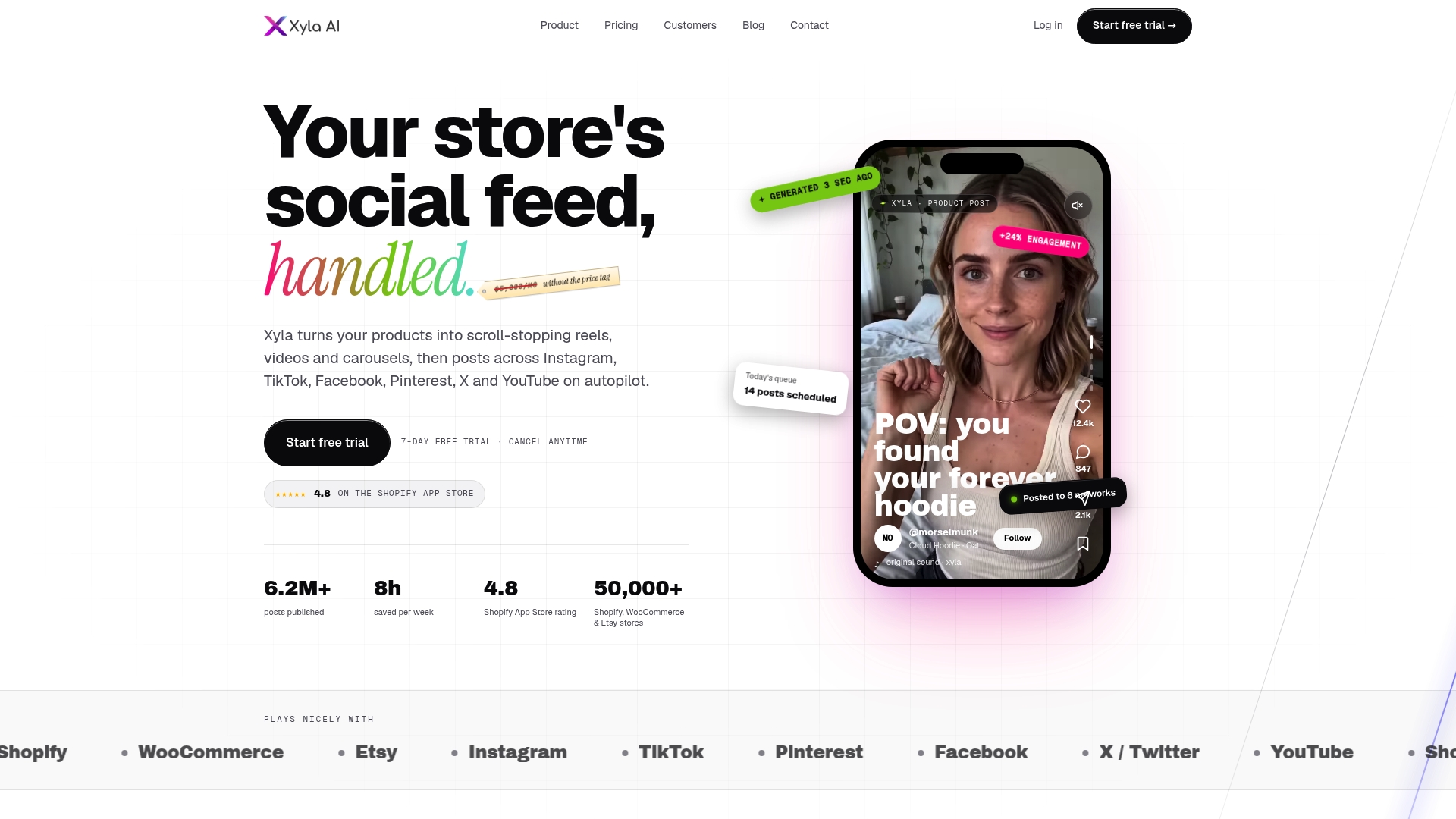
If tagging, scripting, and publishing Shorts every week sounds like more than your team can sustain, our pricing plans show how we handle the production and scheduling side so you can focus on which products to feature next.
FAQ
How many views do you need on YouTube Shorts to make $10,000?
There is no fixed view count because Shorts revenue depends on RPM, audience location, and monetization program terms, which vary too much to state a single figure. For ecommerce sellers, revenue typically comes from product sales driven by Shopping tags rather than ad revenue share, so the more useful metric to track is sticker clicks and add-to-cart rate, not raw views.
What is the 7 second rule on YouTube?
It refers to the common guidance that viewers decide whether to keep watching within the first few seconds of a video, so creators front-load the hook and the core value proposition immediately. For ecommerce Shorts, that means showing the product or the problem it solves before any branding or setup.
How much money per 1,000 views in YT Shorts?
Shorts ad revenue varies widely by niche, audience location, and season, and YouTube does not publish a single standard rate. For ecommerce brands, the more actionable number is cost per acquisition from paid Shorts campaigns, such as the 33% lower CPA that Video Action campaigns delivered for Cider.
Can 30 second YouTube Shorts be monetized?
Yes, Shorts can run ads and qualify for monetization programs for videos under 60 seconds, since Google’s asset guidance treats anything under 60 seconds as feed-eligible. For ecommerce sellers, the relevant monetization path is usually product sales through Shopping tags rather than the Partner Program.
Do I need a certain number of products tagged to use Shopping stickers on Shorts?
No, a single tagged product is enough to display a Shopping sticker, and YouTube allows tagging up to 60 products per video if you want to feature more. Only the first product in your tagged list appears as the visible sticker, so place your priority product first.
Sources
- Tips for selling your own products - Shorts - YouTube Help
- How Cider Drove Revenue with Shorts Ads - YouTube for Business


