

3–5 Hashtags That Make Ecommerce Searchable on Instagram and TikTok
Yes, hashtags still work for ecommerce in 2026, but only when you stop chasing volume and start using a precise mix of 3 to 5 tags that combine niche relevance, purchase intent, and your own brand. Instagram now treats hashtags as a search and SEO signal rather than a bulk reach lever, so the single move that pays off fastest is trimming your tag set down to a handful of highly targeted terms. Do that on Instagram and TikTok first.
TL;DR:
- Using a small, targeted set of three to five highly relevant hashtags improves search visibility and attracts engaged buyers more effectively than stacking many generic tags.
- Effectiveness depends on combining niche product tags, purchase intent, community or lifestyle tags, and consistent branded hashtags tailored to your specific audience and niche.
- Regular testing, vetting, and rotating your hashtag sets based on performance metrics like reach and clicks are essential to adapt to changing trends and platform algorithms.
- Avoid using broad or overused tags, and never rely on hashtags tied to other brands’ trademarks to prevent legal issues or misrepresentation.
- Automating hashtag research and posting with tools like AI-driven platforms can save time and ensure your tags stay relevant and optimized across social channels.
Table of Contents
- What Are Ecommerce Hashtags and Why the 5-Tag Rule Matters
- Ready-to-Use Ecommerce Instagram Hashtags by Platform and Category
- How to Build a 3-5 Hashtag Mix From Four Pillars
- How to Find and Test the Best Ecommerce Hashtags
- Best Ecommerce Hashtags by Sector: Fashion, Beauty, Home, Food, and Reels
- Legal and Copyright Rules for Ecommerce Hashtag Use
- Hashtags Don’t Work Alone: Connecting Them to Your Wider Marketing
- What Ten Years of Watching Social Algorithms Change Taught Us About Hashtags
- Automate Your Hashtag Strategy Without the Manual Grind
- Sources
- FAQ
What Are Ecommerce Hashtags and Why the 5-Tag Rule Matters
Ecommerce hashtags are the searchable labels you attach to product posts, reels, and stories to help shoppers and platform algorithms find your store. Think of them as a hashtag strategy for ecommerce, not a decoration. The old habit of stacking 20 or 30 tags into a caption is a leftover from an era when hashtags functioned like reach lottery tickets. That era is over.
Instagram’s own current guidance recommends around 3 to 5 highly relevant hashtags per post, framing them as part of Instagram SEO rather than a discovery multiplier. The platform’s algorithm now reads hashtags the way a search engine reads keywords: it checks whether the tag genuinely matches your content, your niche, and your audience’s intent. Slap #love or #instagood on a product photo and you’re not reaching more people. You’re diluting the signal that tells Instagram what your post is actually about, a pattern flagged repeatedly in recent guides warning that generic, high-volume tags attract low-quality traffic instead of buyers.
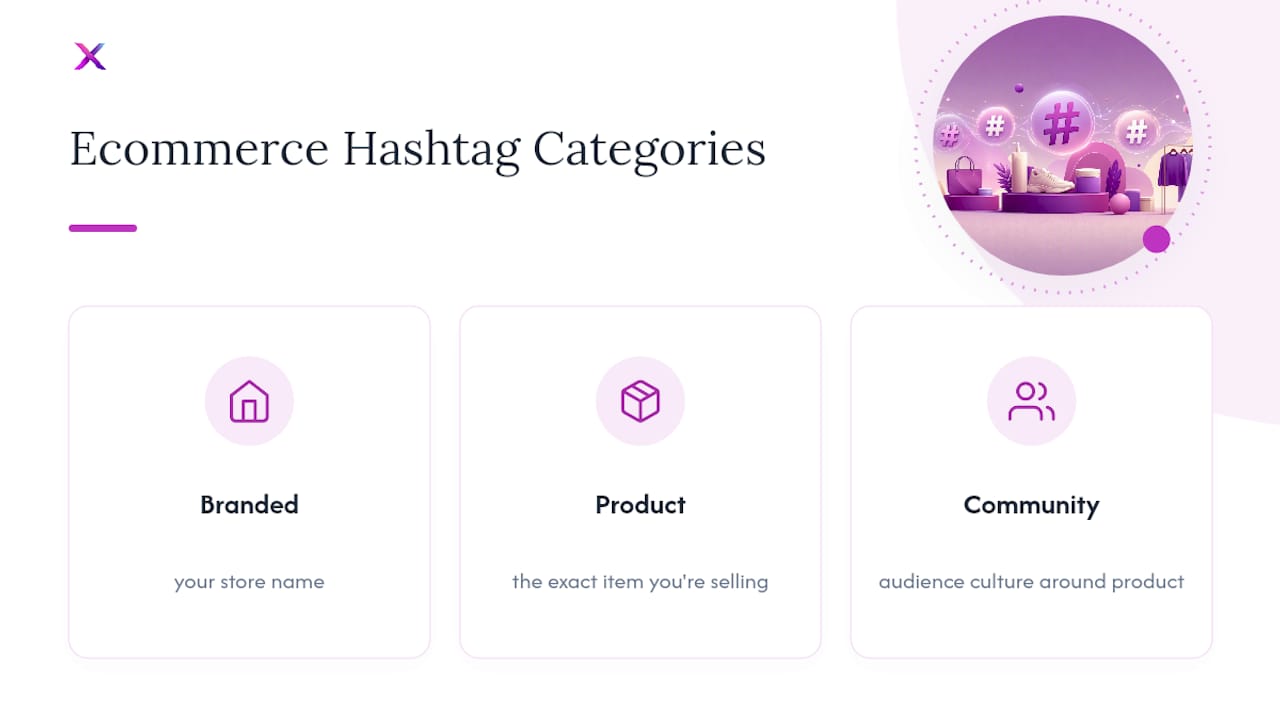
There’s also no such thing as a universal top-10 hashtag list that works across every store. Effective tags are niche-dependent, splitting into three broad categories: branded (your store name), product-specific (the exact item you’re selling), and community or niche tags (the audience culture around that product). A leather bag brand and a sustainable skincare brand need entirely different hashtags for online shops, even if both sell to similar-income shoppers. That’s the real difference between popular ecommerce tags and effective ones. Popular tags get impressions. Effective tags get the right eyeballs.
Ready-to-Use Ecommerce Instagram Hashtags by Platform and Category
Here’s how to build starter sets you can adapt to your own catalog right now. Treat these as templates, not copy-paste finals. Swap in your product, material, and city or region where relevant.
Instagram (cap at 3 to 5 per post):
- Product: #LeatherToteBag, #HandmadeCandles, #OrganicSkincare
- Niche/community: #SustainableFashion, #SmallBatchBeauty, #SlowLiving
- Purchase-intent: #GiftIdeas, #WeddingDress, #HomeOfficeSetup
- Branded: #YourBrandName (use consistently on every post so it becomes searchable over time)
TikTok (slightly looser, 3 to 6 works, but relevance still beats volume):
- Product/trend: #TikTokMadeMeBuyIt, #AmazonFinds (only if genuinely relevant), #SmallBusinessCheck
- Niche: #CleanGirlAesthetic, #CottagecoreHome, #MinimalistWardrobe
- Branded/UGC: #YourBrandNameHaul, #YourBrandNameUnboxing
Reels specifically: Place hashtags in the caption, not buried in an on-screen sticker where they’re harder for the algorithm to parse and invisible to anyone scrolling with sound off. A sticker tag can supplement, but the caption tags do the heavier lifting for reach and search.
One caution worth repeating: mixing in one or two broad tags (#Fashion, #Beauty) is fine for context, but if every tag on your post is generic, you’re signaling nothing specific about your product. Precision beats popularity almost every time.
How to Build a 3-5 Hashtag Mix From Four Pillars
Instead of guessing, build every hashtag set from four repeatable pillars, which form the core of a sustainable ecommerce hashtag strategy:
- Product/category tag that names the exact item, e.g. #CeramicMug.
- Purchase-intent tag targeting the shopper’s mindset, e.g. #GiftForHer.
- Community/lifestyle tag tapping into product culture, e.g. #PlantParent.
- Branded/UGC tag consistent with your store’s tag that customers may use.
Typically, a standard product post includes one tag from each pillar. During launches or sales, add an extra purchase-intent tag and reduce lifestyle tags. When reposting user content, emphasize branded and community tags.
Pro Tip: Don’t just create a branded hashtag and forget it. Watch which customers start using it organically on their own posts, then feature those posts back on your grid. That’s how a static tag turns into a living UGC ecosystem instead of a name nobody adopts.
How to Find and Test the Best Ecommerce Hashtags
Start discovery in the native search bar of whichever platform you’re posting to. Type your product category and watch the autocomplete suggestions and related tags Instagram or TikTok surfaces. Those aren’t random. They reflect what people in your niche are actually searching.
From there, vet each candidate tag for three things: relevance to the exact post, whether it shows signs of being flagged or banned, and whether its post volume is high enough to matter but not so saturated your content vanishes on arrival. Hashtag analyzer tools and AI generators can flag toxic or banned tags before you waste a post on one.
Run genuine A/B tests: post similar content with two different tag mixes over a few weeks and compare results side by side. Tracking reach, impressions, engagement rate, profile visits, and product clicks tells you which mix is actually moving shoppers, not just views. Review and rotate your tag sets roughly monthly. Trends shift, and a tag that performed in January can go stale by spring.
- Reach: how many unique accounts saw the post
- Impressions: total views, including repeat visits
- Engagement rate: likes, comments, saves relative to reach
- Profile clicks and product clicks: the metrics that tie hashtags to actual sales intent
Best Ecommerce Hashtags by Sector: Fashion, Beauty, Home, Food, and Reels
Every vertical has its own version of the four-pillar mix. Here’s how it plays out in practice.
- Fashion: #CapsuleWardrobe, #SustainableFashion, #OOTD, #YourBrandNameStyle. Rationale: fashion shoppers browse by aesthetic and season, so lifestyle tags outperform pure product tags.
- Beauty: #CleanBeauty, #SkincareRoutine, #GlowUp, #YourBrandNameGlow. Rationale: beauty buyers search by concern (acne, dryness) more than product name.
- Home: #CozyHome, #SmallSpaceLiving, #HomeDecorFinds. Rationale: home shoppers respond to room and lifestyle context more than the item itself.
- Food: #SmallBatchSnacks, #MealPrepIdeas, #GiftableFoodie. Rationale: food purchases skew gift and convenience driven.
- Reels/unboxing: #UnboxingVideo, #TikTokMadeMeBuyIt, #YourBrandNameHaul. Rationale: unboxing content thrives on tags tied to the format itself, not just the product.
Adjust for seasonality by swapping in regional or holiday modifiers, #SummerHome instead of #CozyHome in July, for instance. To turn a plain product keyword into a branded UGC tag, just fuse them: #LeatherToteBag becomes #YourBrandNameTote once customers start using it themselves.
Legal and Copyright Rules for Ecommerce Hashtag Use
Hashtags themselves generally aren’t copyrightable, they’re short phrases, and copyright law doesn’t protect short phrases or single words. But that doesn’t mean hashtag use is legally risk-free for a store.
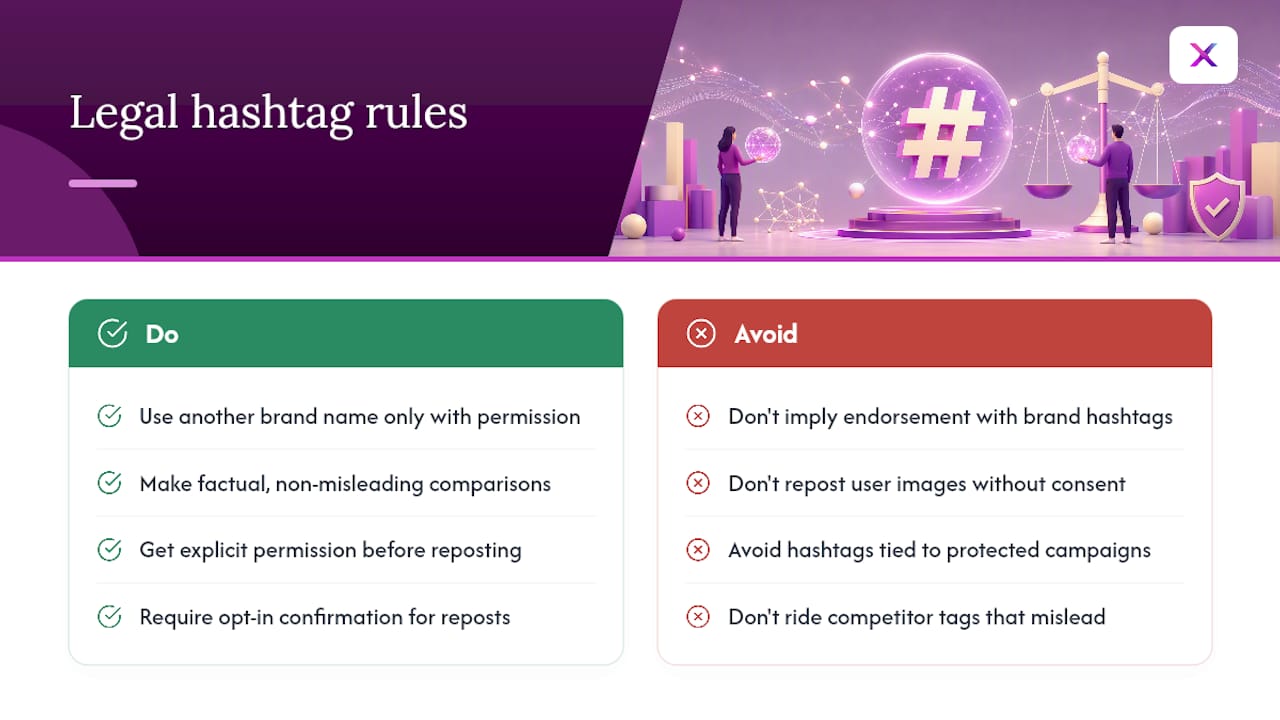
The bigger exposure is trademark, not copyright. If a hashtag incorporates another company’s registered brand name, like tagging your product #Nike-adjacent, you risk implying a false endorsement or affiliation, which can trigger a trademark dispute even if you never claimed a copyright. The safest practice is to only use another brand’s name in a hashtag when you’re making a factual, non-misleading comparison or when you have permission, such as an official brand ambassador arrangement.
There’s a separate issue around user-generated content. When you repost a customer’s photo under your branded hashtag, you’re using their image, not just their tag. Always get explicit permission (a comment reply, a DM confirmation, or a repost app that requires opt-in) before featuring someone else’s content on your own store account, even if they tagged you first. A hashtag invitation to “tag us to be featured” is not automatic legal consent to republish.
Finally, avoid hashtags tied to protected campaigns, contests, or slogans owned by other companies. Riding a competitor’s trending tag for visibility might look clever, but it can blur into unfair competition claims if it misleads shoppers about the source of your product.
Hashtags Don’t Work Alone: Connecting Them to Your Wider Marketing
A hashtag strategy performs best when it’s not living in isolation from the rest of your marketing. Treat your branded hashtag as a connective thread across every channel a customer might touch.
Pull your top-performing hashtag mix into email marketing by inviting subscribers to use your branded tag when they post their purchase, then feature the best ones in a future newsletter. Add your primary branded hashtag to packaging inserts and order confirmation pages, small real estate that costs nothing and quietly turns every buyer into a potential poster.
Cross-reference hashtag performance with your Instagram Shopping setup. A well-tagged post that also carries product tags can move a browsing shopper straight from discovery to checkout without leaving the app, particularly when the hashtag itself functions like a shoppable storefront aggregating branded and campaign-specific posts. Paid social campaigns benefit too: the organic hashtags that generate the highest engagement rate are usually strong candidates for paid boost, since you already have proof the content resonates before spending a dollar on it. Even SEO benefits from the overlap, since the same keyword research that improves site search rankings often surfaces the exact purchase-intent phrases worth turning into hashtags.
What Ten Years of Watching Social Algorithms Change Taught Us About Hashtags
Store owners keep asking whether hashtags matter in 2026 as if the answer is binary. It isn’t. What changed is who they matter to. Hashtags stopped being a numbers game and became a relevance test, and most small stores are still tagging like it’s 2016.
We built Xyla around that shift, because a store owner manually researching, rotating, and testing hashtag sets across four platforms every week doesn’t have eight spare hours to do it properly. The stores that treat hashtag strategy for ecommerce as a real discipline, not an afterthought typed in thirty seconds before hitting publish, are the ones seeing tags actually convert.
— Toby
Automate Your Hashtag Strategy Without the Manual Grind
Everything in this guide, the 4-pillar mix, the platform caps, the A/B testing routine, takes real time to execute consistently across Instagram, TikTok, and Facebook every single week. Xyla AI turns your product listings into ready-to-post reels, videos, and carousels, then applies a hashtag-aware caption and posting schedule automatically, tailored to each platform’s own rules rather than one generic set copied everywhere.
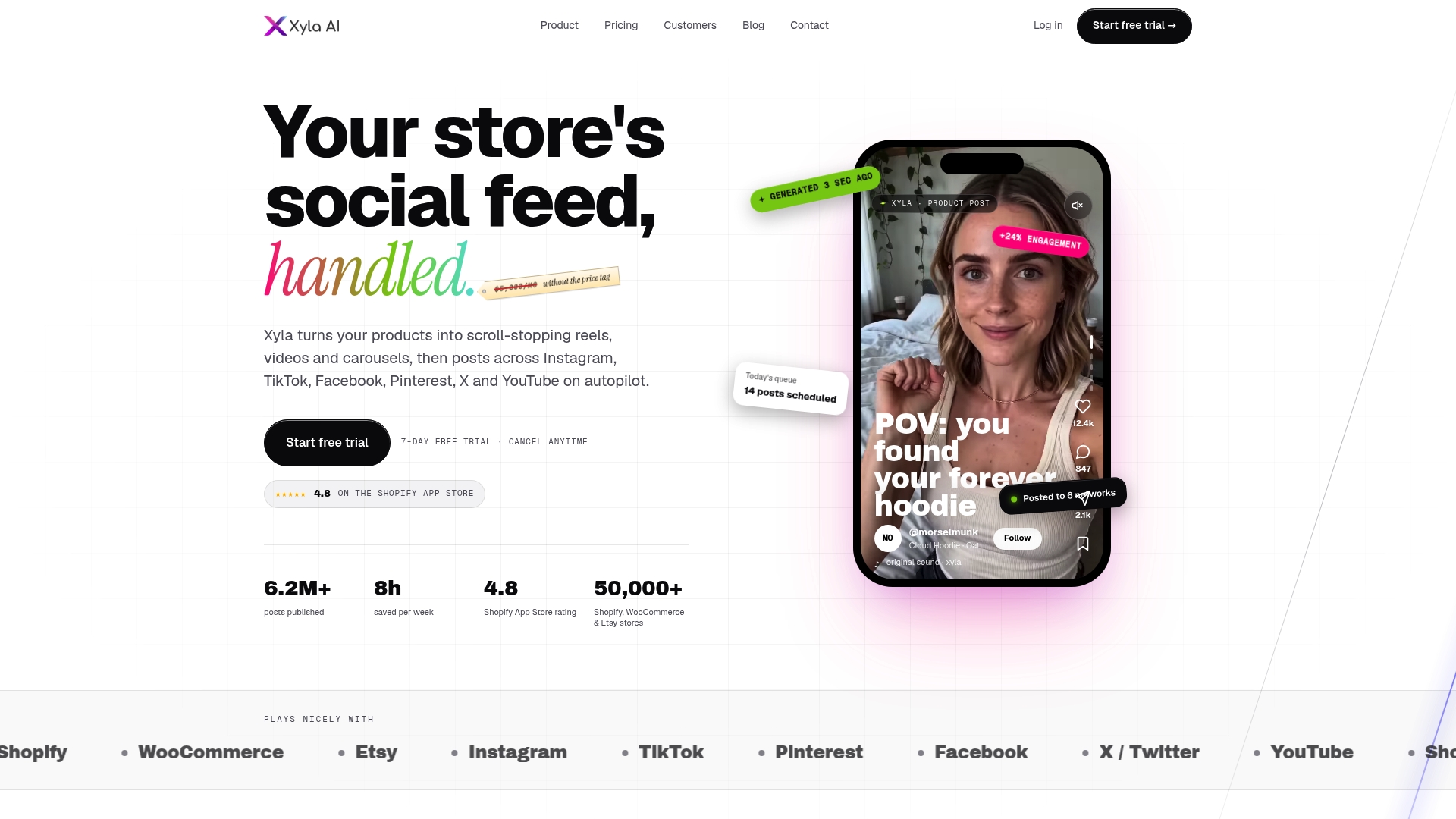
That means no more sitting down every morning trying to remember which tags you tested last month, or manually swapping hashtag sets between five different apps. Xyla handles the catalog-to-content pipeline and the posting cadence, so testing and rotating tags becomes a background process instead of a weekly chore. If you run a Shopify store, the Shopify-specific plans start with tighter catalog integration built in. Check current pricing and plans to see which tier fits your posting volume, and start your next batch of hashtag-optimized content today.
Sources
- Instagram Hashtags: How To Use Hashtags To Increase Reach (2026) - Shopify
- Hashtag Commerce Strategy: How to Build High-Converting Shoppable Hashtag Campaigns | Hashmeta
FAQ
Are Hashtags Still Worth It for Ecommerce in 2026?
Yes, but only when used as a precise, small set rather than a mass-volume tactic. Instagram treats 3 to 5 relevant hashtags as a search and discovery signal, and stores that match tags tightly to product and intent see more qualified clicks than stores stacking dozens of generic tags.
What Is the 5-Hashtag Rule?
The 5-hashtag rule refers to Instagram’s current guidance to use around 3 to 5 highly relevant hashtags per post instead of the older habit of adding 20 or 30. Fewer, sharper tags help the algorithm understand exactly what your post is about.
What Are the Top Hashtags for an Online Store?
There’s no single top-10 list that works for every store, since effective tags depend on your specific niche, product category, and audience. The reliable approach is combining one product tag, one purchase-intent tag, one community or lifestyle tag, and one branded tag for every post.
What Is a Good Tagline or Branded Hashtag for an Online Store?
A strong branded hashtag is short, easy to remember, and tied directly to what makes your store distinct, similar to how a good brand tagline reflects a clear value proposition. Keep it consistent across every post so customers start using it naturally when they share their own photos.
How Do I Know Which Hashtags Are Actually Working?
Track reach, impressions, engagement rate, and product clicks for each hashtag set you test, then compare performance over a few weeks. Tools that flag banned or spammy tags can also save you from wasting a post on a tag that’s quietly throttled.


