

4 Templates That Lock Social Media Brand Consistency for Small Stores
Social media brand consistency means your audience recognizes your store on sight, in a three-second scroll, without reading your name. It doesn’t mean every post looks identical. With billions of people active on social platforms, inconsistent posting quietly erodes the trust that turns a follower into a buyer. The first move: audit your last 20 posts for matching colors, tone, and layout, then lock a template. Tools that apply templates automatically across every post can help maintain consistency.
TL;DR:
- Using templates with locked colors, logos, and formats ensures visual consistency across all social media platforms.
- Maintaining a fixed brand voice with platform-specific tone examples prevents tone drift between channels.
- Building a short, visual style guide focused on real examples helps teams follow guidelines without ignoring them.
- Centralizing assets, scheduling posts in advance, and implementing AI guardrails promote operational consistency at scale.
- Regular spot audits and recognition tests can identify a 10 to 33 percent revenue lift tied to consistent cross-channel branding.
Table of Contents
- What Are the Key Elements of Social Media Brand Consistency?
- How Do You Build a Social Media Style Guide and Brand Kit?
- How Do You Operationalize Brand Consistency at Scale?
- How Do You Measure and Audit Brand Consistency?
- What Are the Most Common Brand Consistency Mistakes?
- Publisher Perspective: Consistency Is a System, Not a PDF
- How Xyla AI Helps Stores Enforce Brand Consistency
- Sources
- FAQ
What Are the Key Elements of Social Media Brand Consistency?
Consistency on social breaks down into four controllable layers. Miss one and the whole presentation feels off, even if the others are solid.
Visual identity is the most obvious layer and the one audiences notice first. That means locked logo placement, a fixed color palette (not “close enough” hex codes), consistent typography, and format-specific layouts, since a Reel cover, a LinkedIn image, and a Pinterest pin all need different crops of the same asset. Canva’s brand consistency research points to export presets as the single easiest fix for the most common visual error: stretched or mis-cropped logos.

Verbal identity is where most small teams get sloppy. Voice is who you are (playful, blunt, technical) and stays fixed everywhere. Tone is how that voice flexes by context, meaning a product launch on Instagram can sound upbeat while a customer-service reply on X stays calm and direct, without becoming a different brand.
Content architecture covers the invisible scaffolding: three or four content pillars (say, product education, behind-the-scenes, customer proof, promotions), a messaging hierarchy that decides what gets said first, and standing rules for CTAs and hashtag counts per platform.
Asset strategy ties it together. A brand kit with locked components, and a small library of templates, does more for consistency than any written rule.
Key elements at a glance:
- Visual identity: logo usage, color palette, typography, format-specific crops
- Verbal identity: fixed voice, flexible tone, platform-specific phrasing examples
- Content architecture: pillars, messaging priority, CTA and hashtag standards
- Asset strategy: brand kits, templates, locked versus editable elements
How Do You Build a Social Media Style Guide and Brand Kit?
A social media style guide only works if people actually open it. Keep it short, visual, and specific to the platforms you actually post on, not a 40-page PDF nobody reads twice. Hootsuite’s brand voice guidance recommends anchoring the document around a voice chart and real dos-and-don’ts examples, not abstract adjectives like “friendly” or “bold.”
Build it in this order:
- Voice chart. Three to five adjectives, each with a real example sentence and a “not this” counterexample.
- Platform notes. One paragraph per network on tone shifts, caption length, and posting cadence.
- Dos and don’ts. Visual and verbal examples side by side, pulled from actual past posts.
- Hashtag policy. Fixed brand tags, plus rules for how many discovery tags to add per platform.
- AI guardrails. A short brand lexicon (approved and banned words) plus a required human review step before anything publishes.
Produce your first four templates before writing another line of the guide: an Instagram carousel, a Reel cover card, a LinkedIn post frame, and a TikTok hook template. These get used daily, so they teach the guide faster than reading it does.
Assign an owner (usually the marketing lead or store owner) and review the guide quarterly, or sooner if you rebrand or add a platform. For a minimum viable launch, aim to have the voice chart and the four templates done in one week. Everything else can follow.
Pro Tip: Write your “don’t” examples using actual off-brand posts you’ve published before, not hypothetical ones. Real mistakes stick in people’s memory far better than generic warnings.
Shopify’s guide to creating brand guidelines is a useful companion here if you’re building your first version from scratch.
How Do You Operationalize Brand Consistency at Scale?
A style guide sitting in a shared drive changes nothing on its own. Consistency happens in the workflow, not the document.
Start by centralizing every logo, font file, color code, and template into one brand kit or digital asset library, and lock the elements nobody should touch. Canva’s research on brand systems found that templates with locked brand elements, where only the copy stays editable, eliminate most of the visual drift that happens when multiple people post to the same accounts.
From there, build the workflow around four habits:
- Centralize assets in one brand kit so nobody pulls an old logo from an email attachment.
- Define who approves what before it goes live, especially for freelancers or new hires.
- Schedule posts in advance so format-accurate content goes out at the right size, on the right day, without a last-minute scramble.
- Set AI guardrails, meaning an approved brand lexicon, prompt templates that bake in your voice, and a human review gate before anything auto-publishes.
Scheduling deserves its own attention since it’s often where consistency quietly breaks.
A guide to automating social media marketing can walk you through mapping templates and cadence into a repeatable weekly rhythm instead of ad hoc posting. On the AI side, tools built for social media managers who need to fill a content calendar reinforce the same principle: automation only helps consistency when brand rules are baked in before generation happens, not corrected after.
How Do You Measure and Audit Brand Consistency?
Consistency is worth measuring because it moves revenue, not just aesthetics. Industry surveys tied to consistent cross-channel presentation report revenue lifts in the rough range of 10 to 33 percent, which is too large a swing to leave to chance.
Track a short list of KPIs on a fixed cadence:
- Recognition: can someone identify your brand from a stripped post, no logo visible?
- Cross-channel engagement trends, watched over months, not single posts.
- Format performance by platform, since a layout that works on Instagram may flop on Pinterest.
For quick checks, run a voice-read test (read three captions aloud, ask if they sound like the same brand), and do monthly spot audits of the last ten posts per channel. Practitioner audits suggest small, cheap recognition tests, even five coworkers rating a stripped post, catch the worst drift before customers notice it.
What Are the Most Common Brand Consistency Mistakes?
Most inconsistency traces back to a handful of repeat offenders, and each has a fast fix.
- Mismatched crops and aspect ratios. Fix it with export presets and format-locked templates for each platform.
- Tone drift between channels. Fix it with short, platform-specific copy examples pulled straight from the voice chart.
- Unreviewed AI output. Fix it with a lexicon of approved terms and a mandatory human check before anything publishes.
- Outdated assets still in circulation. Fix it with version control and an expiration flag on old logos or promo graphics.
Pro Tip: Keep a “retired assets” folder separate from your active brand kit. If old files stay mixed in with current ones, someone will grab the wrong logo eventually.
Publisher Perspective: Consistency Is a System, Not a PDF
Most brand guides fail quietly. Not because the rules are wrong, but because nobody built a system to enforce them once the guide was written. Small ecommerce teams, often just one or two people juggling product photos and customer service, don’t fail at consistency because they lack taste. They fail because nobody has three extra hours a week to reformat a product photo four different ways before lunch.
The fix isn’t more guidelines. It’s fewer decisions per post: locked templates, a scheduled cadence, and automation with brand rules baked in from the start. When those pieces are in place, consistency stops being a discipline problem and becomes a default.
— Toby
How Xyla AI Helps Stores Enforce Brand Consistency
Every operational step above, the brand kit, the locked templates, the scheduling, the guardrails, is exactly what Xyla AI was built to automate for store owners who don’t have a marketing department. Xyla AI turns your existing product photos into on-brand reels, carousels, and posts, applying your colors, fonts, and voice automatically instead of leaving formatting to whoever’s posting that day.
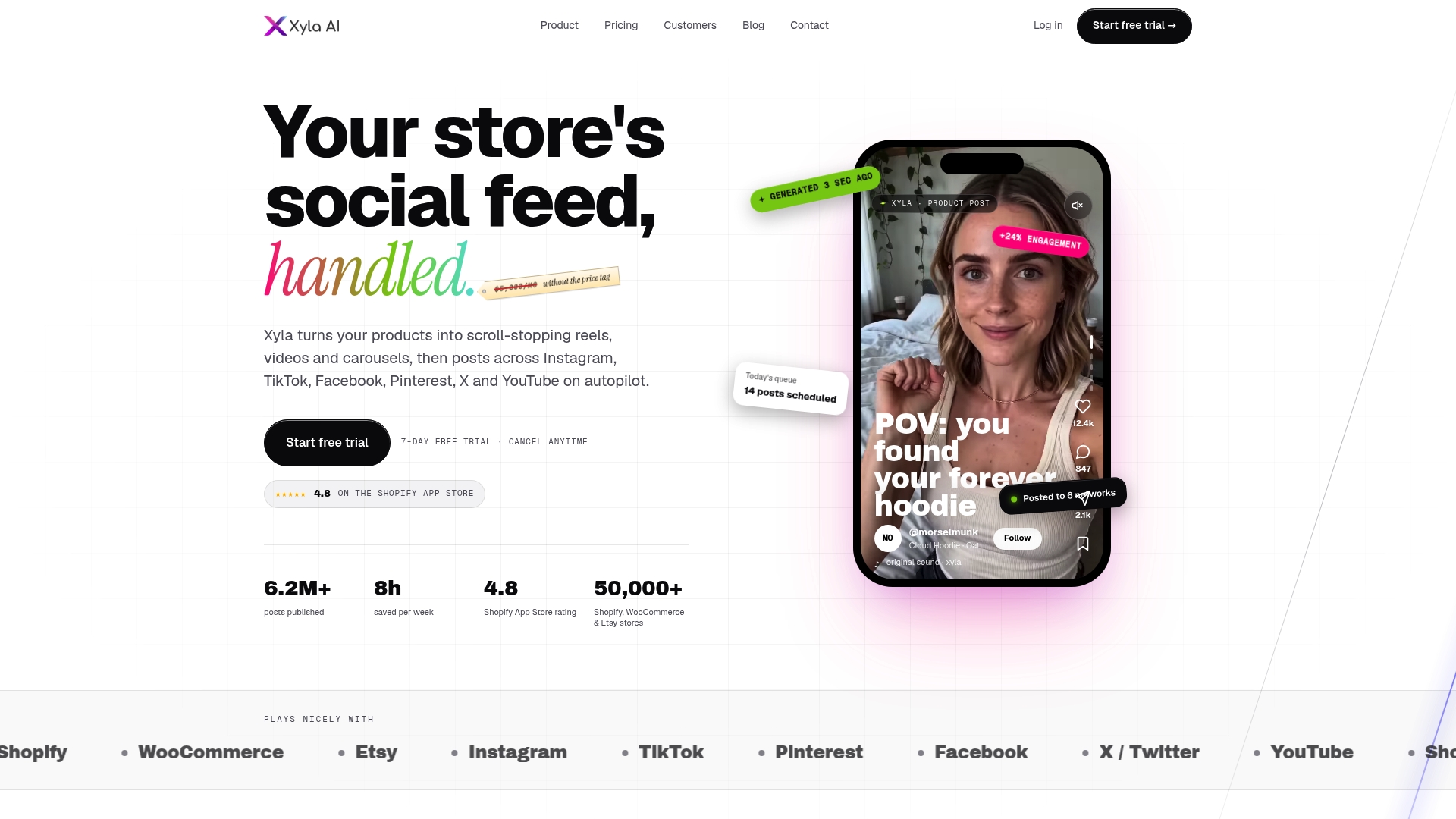
It centralizes your brand kit and styling rules so every generated asset pulls from the same locked palette and logo files, and it handles captions and writing style so your tone stays consistent even when AI is drafting the first pass. Posts get scheduled and published at optimal times across social networks without you touching a calendar. For sellers who need this running without hiring anyone, see how the automation workflow fits together and start a trial to see it applied to your own product catalog.
Sources
Key sources for this guide include Statista’s social network user data, Hootsuite’s brand voice framework, Inkbot Design’s brand consistency research, and Strategies & Voices’ guide to social brand consistency.
- Number of worldwide social network users - Statista
- How to build a strong brand voice in 2026 | Hootsuite
- Brand consistency across channels (Inkbot Design overview citing industry reports)
FAQ
What Is the 5 5 5 Rule for Social Media?
The 5 5 5 rule suggests spending five minutes commenting on other accounts, following five relevant new accounts, and engaging with five posts daily to build visibility. It’s an engagement habit, not a brand consistency framework, though consistent voice matters even in quick comments.
What Is the 3 7 27 Rule in Branding?
Definitions vary across sources, but the common version holds that people form a brand impression in about 3 seconds. It underscores why repeated, consistent visuals matter more than any single post.
Can You Give Examples of Brand Consistency?
A strong example is a store using the exact same product photo filter, caption sign-off, and color overlay across Instagram, TikTok, and Facebook, so a follower recognizes the post before reading the caption. Locked templates, like those built into brand kits in tools such as Xyla AI, make this repeatable without manual formatting each time.
What Is the 5 3 1 Rule for Social Media?
One common version suggests posting five pieces of curated or third-party content, three original brand posts, and one promotional post per set of content, keeping self-promotion from overwhelming the feed. It’s a content-mix guideline rather than a formal branding standard, and businesses often adapt the ratio to their own audience.
How Often Should I Audit Social Media Brand Consistency?
Run quick spot checks weekly, a fuller sample audit of your last ten posts per channel monthly, and a full style guide review quarterly. This cadence catches drift early, matching the schedule outlined by practitioner audit guidance.


